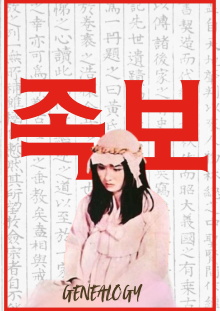
During the Japanese occupation of South Korea, a Japanese bureaucrat is ordered to persuade an influential Korean patriarch into obeying the law of changing his Korean surname to a Japanese one.
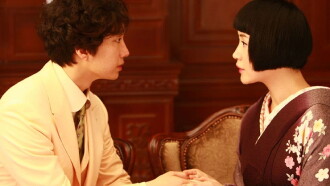
1930s Korea, in the period of Japanese occupation, a new girl, Sook-hee, is hired as a handmaiden to a Japanese heiress, Hideko, who lives a secluded life on a large countryside estate with her domineering Uncle Kouzuki.
Pil-ju, an Alzheimer's patient in his 80s, who lost all his family during the Japanese colonial era, and devotes his lifelong revenge before his memories disappear, and a young man in his 20s who helps him.
A man wanders around the mountains with a bleeding leg, holding a rifle in his hand. Seemingly a fugitive, he runs from as-yet unknown pursuers, but he also seems to be following somebody who has already walked the same path.
From the Japanese Occupation a 'comfort woman' returns from China an old woman. At the end of the war she can't return home and spends the next 65 years living as an alien in a foreign country.
Based on the life of the Korean anarchist Park Yeol, the film shows his struggle to counter the massacre of Koreans by the government during the 1923 great Kanto earthquake, focusing on his activities as the leader of the anti-Japanese organization Bulryeongsa and his relationship with Japanese comrade Fumiko Kaneko.
A man assists a woman in danger, but through her actions, she unintentionally causes his death. Everyone in the village knows that she visits his tomb every spring, but no one knows the details of her story.
During the time of the Peasants' Wars, the free knight Götz von Berlichingen gets into all kinds of private and political entanglements when he defends the Bishop of Bamberg.
A remote stone house nestles peacefully on the edge of the Yorkshire moors. In the garden. Faith Armstrong describes the flowers and the late afternoon skies to Jack, her blind husband.
A queen has a stepdaughter named Baby Love, whom she wants to sell as a bride to the highest bidder. Four individuals present themselves to the castle to contribute to a kind of auction, but the girl, route to all sexual experiences while still a virgin, prefers to set out and lose virginity with a young knife thrower who is, incidentally, also the queen's lover.
John Dexter’s brilliant production, James Levine’s masterful conducting of the eclectic score, and a sensational cast come together to make this Kurt Weill–Bertolt Brecht masterpiece a riveting evening of music theater.
Taking the stage with the sun sinking in the West, Cheap Trick opened their Reading Festival appearance aptly with the raucous, quick-hittin' action of "Hello There", followed by the power pop rockin' "Come On, Come On".
Comments
Have you watched Genealogy yet? What did you think about it?