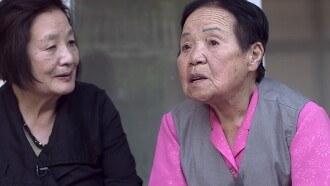
Bae Ponggi, a Korean woman who became a comfort woman for the former Japanese military in 1944, testifies for the first time in Okinawa in 1975, after Okinawa was returned to the mainland. In the "red-tiled house" on Tokashiki Island, Okinawa, which was turned into a comfort station, she talks about her life and relationships, her situation after being left behind on the Korean Peninsula and unable to return to it after the war, and what happened afterwards.
A Japanese-American director digs deep into the controversial 'comfort women' issue to settle the debate on whether the women were paid prostitutes or sex slaves, and reveals the motivations and intentions of the main actors pushing to revise history in Japan.
The Silence narrates the struggle of fifteen "comfort women"—former sex slaves by the Imperial Japanese Army during WWII—for recognition and reparation.
Korean sex worker Yonhee goes to Japan to build solidarity with her counterparts there. YAMASITA Youngae heads for Kyoto to give a lecture on how former prostitute-turned-comfort women were left out of the movement to achieve justice for comfort women.
A remote stone house nestles peacefully on the edge of the Yorkshire moors. In the garden. Faith Armstrong describes the flowers and the late afternoon skies to Jack, her blind husband.
During the time of the Peasants' Wars, the free knight Götz von Berlichingen gets into all kinds of private and political entanglements when he defends the Bishop of Bamberg.
Sesame Street celebrated its 10th anniversary in the spring of 1979 with a half-hour PBS special hosted by James Earl Jones titled A Walking Tour of Sesame Street.
John Dexter’s brilliant production, James Levine’s masterful conducting of the eclectic score, and a sensational cast come together to make this Kurt Weill–Bertolt Brecht masterpiece a riveting evening of music theater.