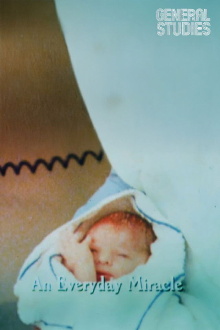
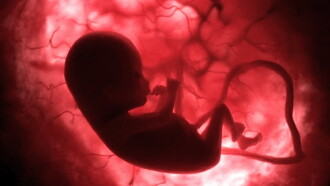
In this BBC documentary directed by Andrew Neal and narrated by David Attenborough, modern medical imaging allows scientists and doctors to observe human development in the womb as never before. Following the stages of pregnancy from conception to birth, the film reveals the complex biological processes that shape the earliest months of human life. (Note: Standalone BBC2 documentary (1981) broadcast within the "General Studies" strand but produced and credited as an independent titled program.)
Indigenous chief Juma Xipaia fights to protect tribal lands despite assassination attempts. Her struggle intensifies after learning she's pregnant, while her husband, Special Forces ranger Hugo Loss, stands by her side.
Evelin, 13, is pregnant from a 22-year-old who recently left the drug trade. Luana, 15 years old, declares that she planned her pregnancy, as she wanted to have a child of her own.
Edeltraut Hertel - a midwife caught between two worlds. She has been working as a midwife in a small village near Chemnitz for almost 20 years, supporting expectant mothers before, during and after the birth of their offspring.
With cinematic storytelling, a moving musical score, computer animation, and 4D ultrasound images, this documentary accompanies a new human life from conception to birth, poetically describing developmental milestones and the human experience of living in a womb.
'Olmo and the Seagull' is a poetic and existential dive into an actress's mind during the nine months of her pregnancy as she must confront her most fiery inner demons while trying to rewrite a new philosophy of life, identity and love.
Five years after the horrible bloodbath at Camp Crystal Lake, new counselors roam the area, not sensing the ominous lurking presence that proves that the grisly legend is real.
Two swordsmen from separate sects band together to kill Ruthless Chi, head of another sect.But did he really die? Events show that the Ruthless killer stills controls the strings and its up to the swordsmen to reveal his true identity.
A female teacher spots one of her students being molested by a vagrant. But her rescue attempt fails as the vagrant drags the teacher into an empty classroom and sexually assaults her.
Simon Simpson runs an entertainment agency in Liverpool. At one of his regular auditions in The Bootle Railway Club he sees an aggressive young man fresh from the dole queue who dreams of becoming a professional comedian.