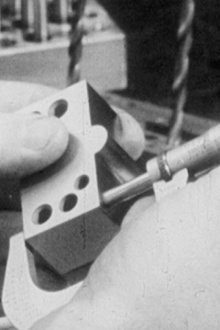
Into my hands fell a 20-minute exhortation to find the right job after high school. Struck by its fierce redundancy, I undertook a distillation, editing the optical track, aiming for conversational cadence, choosing image only when silent. Preserved by the Academy Film Archive in 2013.
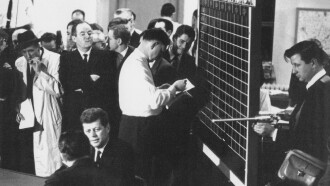
A man of humble beginnings and honest intentions rises to power by nefarious means. Along for the wild ride are an earnest reporter, a heretofore classy society girl, and a too-clever-for-her-own-good political flack.
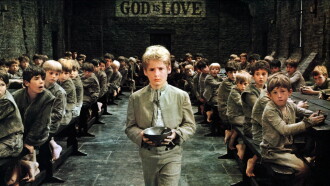
Musical adaptation of Charles Dickens' Oliver Twist, a classic tale of an orphan who runs away from the workhouse and joins up with a group of boys headed by the Artful Dodger and trained to be pickpockets by master thief Fagin.
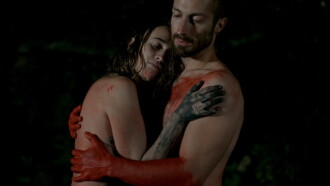
Intense high school senior Michael finds himself in a passionate series of hookups with a teammate on his track team, the enigmatic and mysterious Evan.
The corner of a street is matched and mixed with the chant of a bird recorded on that same street. A symbiotic relationship is triggered: the rapid and successively repetitive montage cuts between the image of the street and the corners of the video frame itself produce new textures and shapes in our brain, whilst the sound follows the same rhythmic movements by emphasizing different “corners” (frequencies) from the bird’s singing.
Produced by the Army Pictorial Service, Signal Corps, with the cooperation of the Army Air Forces and the United States Navy, and released by Warner Bros.
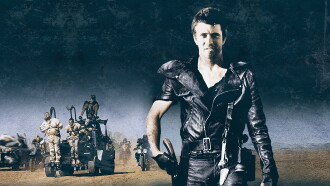
Popular movie trailers from 1981
These some of the most viewed trailers for movies released in 1981:
Anton and his family moved into a high-rise building. In order for the new neighbors to accept his trumpet music, he has to perform a little "miracle" with the instrument.
Kishinchand is a Customs Officer based in Bombay. He has been assigned to infiltrate and expose a gang of smugglers and drug dealers headed by two gangsters named Jaggan and Ajay Kumar.