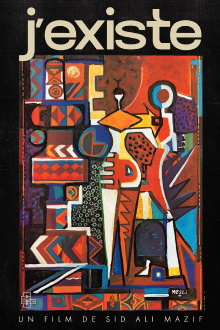
Composed of three parts, this montage film addresses all aspects relating to the role of women in Algerian society: their ambitions, the role of the State and the help of organizations that were created during the struggle for female emancipation. .
It is the evocation of a life as brief as it is dense. An encounter with a dazzling thought, that of Frantz Fanon, a psychiatrist of West Indian origin, who will reflect on the alienation of black people.
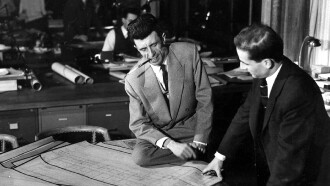
Constructing freestone buildings on the cheap, Pouillon made a name for himself at the end of the 1940s in Aix-en-Provence and Marseille, shaking up his peers who only dreamed of towers and concrete bars.
Structured as a labyrinth-like game and inspired by Jorge Luis Borges, Aleph is a travelogue of experience, a dreamer's journey through the lives, experiences, stories and musings of protagonists spanning ten countries and five continents.
Jacqueline Gozlan - who left Algeria with her parents in 1961 - nostalgically retraces the history of the Algiers Cinematheque, inseparable from that of the country's Independence, through film extracts and numerous testimonies; notably that of one of its creators, Jean-Michel Arnold, but also of filmmakers such as Merzak Allouache and critics such as Jean Douchet.
Documentary on the beginnings of Algerian independence filmed during the summer of 1962 in Algiers. The film was banned in France and Algeria but won the Grand Prize at the Leipzig International Film Festival in 1965.
The essay by René Vautier, "Déjà le sang de Mai ensemençait Novembre", starts with the recapitulation of the representations of Algeria throughout the history of visual arts in France in an effort to explore the causes for the quest for independence.
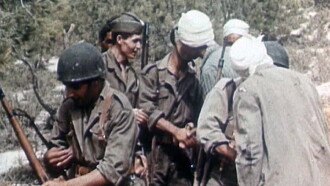
These are the first images shot in the ALN maquis, camera in hand, at the end of 1956 and in 1957. These war images taken in the Aurès-Nementchas are intended to be the basis of a dialogue between French and Algerians for peace in Algeria, by demonstrating the existence of an armed organization close to the people.
"Djazaïrouna", produced by the cinema service of the Provisional Government of the Algerian Republic (GPRA), is a montage film intended to inform the international community at the UN in 1959 on the objectives pursued by the Algerian resistance during the war of 'Algeria.
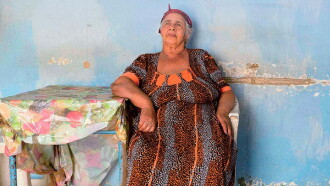
Alone in a small white house on the edge of national road 1, the Trans-Saharan road, which connects Algiers to Tamanrasset crossing the immensity of the desert, Malika, 74, one day opened her door to the director Hassen Ferhani, who came there to scout with his friend Chawki Amari, journalist at El Watan and author of the story Nationale 1 which relates his journey on this north-south axis of more than 2000 km.
Popular movie trailers from 1982
These some of the most viewed trailers for movies released in 1982:
In 1963, living a routine life on Norma Place in Los Angeles, recluse writer Dorothy Parker and bisexual husband Alan Campbell recall their often-rocky relationship, started thirty years earlier.
A young woman travels with her partner to England on the unexpected death of her brother. Staying with her sister-in-law, she finds her companion soon drawn into a satanic cult based in the house whose rites seem to centre somewhat on large-scale sexual congress.
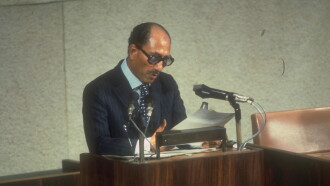
It begins in the days after Sadat's assassination in 1981 by an islamist cell of army officers. The American media had led an outpouring of shock and grief in the United States at the death of the heroic president.
A hunting party arrives at a lodge in the Tatra mountains in Slovakia, where one woman in the party had “accidentally” shot and killed her first husband some time ago.
Comments
Have you watched I Exist yet? What did you think about it?