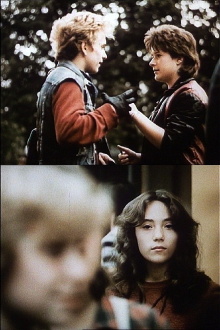
The film’s title is taken from a song, used here as a leitmotif, written by Günter Jordan and the East German rock group Pankow. This sensitive report about rebellious teenagers in Berlin’s “wild East” was banned before its first screening.
In 1963, living a routine life on Norma Place in Los Angeles, recluse writer Dorothy Parker and bisexual husband Alan Campbell recall their often-rocky relationship, started thirty years earlier.
Tomisaburo Wakayama is back with a new take on the classic Yamamoto Shugoro masterpiece “Ame Agaru” as a samurai on the run with his bride who makes a living by challenging dojo masters to a match, then taking money from them to keep quiet about it.
A young woman travels with her partner to England on the unexpected death of her brother. Staying with her sister-in-law, she finds her companion soon drawn into a satanic cult based in the house whose rites seem to centre somewhat on large-scale sexual congress.