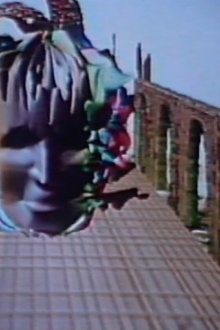
Long before CGI became invisible '9600 Bauds' imagined a world where computers could dream. Through a succession of morphing faces, shifting landscapes and surreal digital transformations, Hervé Huitric and Monique Nahas turn primitive polygons into something strangely alive. Part technical demonstration, part avant-garde experiment, the film captures a moment when computer animation was still an unexplored frontier and every rendered image felt like a glimpse into the future.
Set in Hamburg's “Hell's Kitchen,” a waterfront milieu of gangsters, pimps, dealers and prostitutes, the story follows the attempts of an ex-seaman first to insinuate himself into the scene, and then to extricate himself from it.
The film is inspired by the Mário de Sá-Carneiro short story, where the narration is made by Professor Antena's assistant who walks by his side when he is run over in a perhaps enigmatic way.
A guy picks up a girl hitchhiking and starts making advances to her to sleep with her, albeit with the ruse of offering to do a photo shoot so that she can succeed as a model.
Traveling through villages along the Nicaraguan-Honduran border, the filmmakers document the impact of the covert war against Nicaragua's Sandinista government, featuring interviews with mercenaries, soldiers, spies and civilian victims.
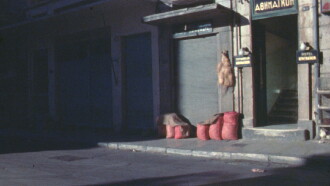
“The details of the young actor’s face – his eyes, eyebrows, earlobe, chin, etc. – are set opposite the old buildings in the market quarter of Athens, where every street is named after a classic ancient Greek playwrite.
Mimosa is about a girl growing up in an orphanage who tries to make life fun for all the residents. It's a great Easter story, an animated fairy tale about a witch kid and what she's up to in the orphanage while the mother witch whips around with her broom.
Comments
Have you watched 9600 Bauds yet? What did you think about it?