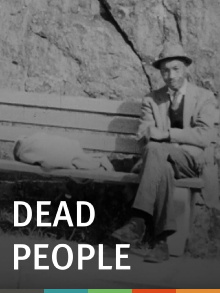
Filmed in 1974 and edited and released in 1983 (and then rereleased by its director in 2005), DEAD PEOPLE purports to document the final years of Frank Butler, a local fixture in the depressed burg of Ellicot City with a particular fondness for drink and tales of the dead. Over hazy 16mm footage two decades later, Deutsch adopted a painfully unsentimental view of his early approach, colored as it was by notions of ethnographic film and an undercurrent of fetishism for a man he considered somehow more "alive" than himself. While it chafes against notions of authenticity in documentary and incisively hints at the complicity of the subject in inventing his own history, DEAD PEOPLE simultaneously oozes nostalgia, transcending its own judgment as a gauzy memorial for the man Deutsch once called a friend.
Jerry Wald has to write about radio, visiting Sid Gary gives him the tip it might be more easy for him to write this article at the radio station than at his newspaper office.
Working men and women leave through the main gate of the Lumière factory in Lyon, France. Filmed on 22 March 1895, it is often referred to as the first real motion picture ever made, although Louis Le Prince's 1888 Roundhay Garden Scene pre-dated it by seven years.
Upon realising her generation won’t have a future unless the world’s politicians act now on climate change, 15-year-old Greta Thunberg skipped school in August 2018 to protest outside the Swedish parliament.
Traveling through villages along the Nicaraguan-Honduran border, the filmmakers document the impact of the covert war against Nicaragua's Sandinista government, featuring interviews with mercenaries, soldiers, spies and civilian victims.