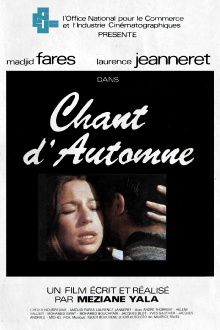
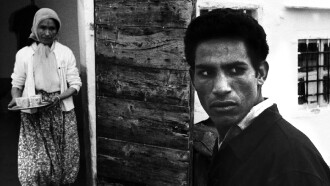
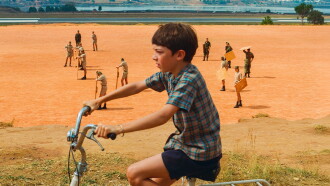
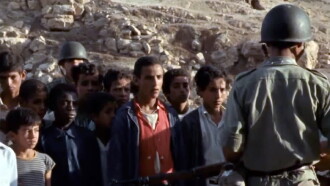
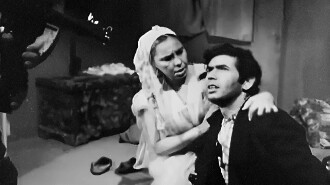
Chants d’Automne (Song of Autumn), is a story of daily life on a colonial farm, at the start of the war of liberation in Algeria, describing individual and group behavior in this context. An unthinkable, even dangerous, romantic relationship, born in this context between Catherine, daughter of a settler, and Abdelmalek, son of a blacksmith. Managing his vast property in a feudal manner, Monsieur Marcel whose only ambition is his personal enrichment to the detriment of the community. Everyone fears his authority except his daughter Catherine, a student in France, who returns home during the holidays. She does not stop herself from expressing to him her ideas of justice which go against family and colonial practices. Catherine and Abdelmalek's romance makes relationships increasingly strained, but the call for freedom will be stronger than a woman's love.
Agnès Varda eloquently captures Paris in the sixties with this real-time portrait of a singer set adrift in the city as she awaits test results of a biopsy.
A man befriends a fellow criminal as the two of them begin serving their sentence on a dreadful prison island, which inspires the man to plot his escape.
Former petty criminal Ali la Pointe becomes a commander of the Algerian Front de Liberation Nationale, directing a guerilla insurgency against the colonial French occupation.
In colonial Vietnam, dashing French naval captain Jean-Baptiste, wealthy plantation owner Éliane Devries, and her adopted Vietnamese daughter Camillevare form the three points of a cross-cultural romantic triangle.
Has everything really been said about the Algerian war? Although the archives are opening up, almost fifty years after the signing of the Evian Agreements (March 18, 1962), direct witnesses are beginning to disappear.
This rambling political melodrama tells the story of a French Breton who learns about colonialism while teaching native students in France's colonies of Tunisia and Algeria and returns to his native Brittany to see that the same conditions prevail there.
In late 19th century Hong Kong, the British may rule the land, but the pirates rule the waters. Coast Guard officer Dragon Ma is determined that his beloved Coast Guard will not be made a fool of.
When his parents are killed by three men, Amar, Akbar and Anthony, Vijay teams up with a forest officer who was framed in a murder case to avenge their deaths.
When the 'Lowly Ronin' helps an orphaned teenage girl avoid being turned into a prostitute, she then claims he is her father and they start a farm as father and daughter until fate steps in and he must draw his sword.
Mimosa is about a girl growing up in an orphanage who tries to make life fun for all the residents. It's a great Easter story, an animated fairy tale about a witch kid and what she's up to in the orphanage while the mother witch whips around with her broom.
Comments
Have you watched Song of Autumn yet? What did you think about it?