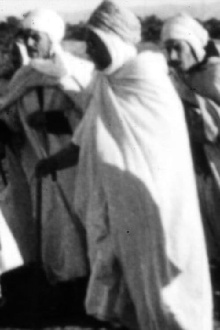
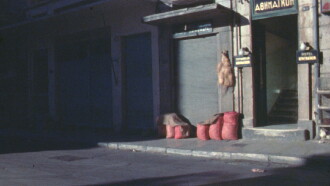
“La Zerda and the songs of oblivion” (1982) is one of only two films made by the Algerian novelist Assia Djebar, with “La Nouba des femmes du mont Chenoua” (1977). Powerful poetic essay based on archives, in which Assia Djebar – in collaboration with the poet Malek Alloula and the composer Ahmed Essyad – deconstructs the French colonial propaganda of the Pathé-Gaumont newsreels from 1912 to 1942, to reveal the signs of revolt among the subjugated North African population. Through the reassembly of these propaganda images, Djebar recovers the history of the Zerda ceremonies, suggesting that the power and mysticism of this tradition were obliterated and erased by the predatory voyeurism of the colonial gaze. This very gaze is thus subverted and a hidden tradition of resistance and struggle is revealed, against any exoticizing and orientalist temptation.
After her father’s sudden death, Feride takes on the role of the father in the family. Her mother, Nurcan, desperately tries to replace her lost husband with Feride, while her brother, İlker, starts to drift away from the family.
When the lights dim and the stage is revealed, Meschke channels life through the strings of his puppets, triggering the spiritual connection between the creator and his alter-egos: the charismatic Don Quixote, the loving Penelope, the inquisitive Baptiste, or the mysterious Antigone.
A synaesthetic portrait made between French Polynesia and Brittany, Color-blind follows the restless ghost of Gauguin in excavating the colonial legacy of a post-postcolonial present.
Filmed inside Pharmacy No. 3 in Shanghai, Joris Ivens and Marceline Loridan-Ivens document the daily work of a state pharmacy that functions as both a dispensary and a neighborhood medical center.
Deniz and her friends, who have been apart for the summer, have much to tell each other. While adults are busy with their professional lives, Deniz and her friends are still confused about their university plans.
“The details of the young actor’s face – his eyes, eyebrows, earlobe, chin, etc. – are set opposite the old buildings in the market quarter of Athens, where every street is named after a classic ancient Greek playwrite.
Faithful adaptation of a story by Tomasi di Lampedusa on the encounter between a man and a mermaid, for the television series Ten Italian directors, ten Italian short stories , in which Gianni Amelio, Luigi Comencini, Carlo Lizzani participated among others.
The story, told partly in flashback to 1968, concerns a clique of English public schoolboys who bully and humiliate an unpopular younger pupil (Cox) who is 'bad at games'.
A woman was raped in her school years and broke up with her lover because of it. Later, when she became a high school music teacher, she had forbidden liaisons with her colleagues and students at her apartment.
Comments
Have you watched The Zerda or the Songs of Forgetting yet? What did you think about it?