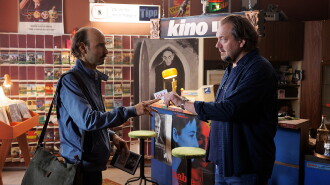
Detlev, a single insurance clerk in his 30s, is kept dependent by his loving and caring mother and loses his girlfriend Karin as a result. Grief and an alcoholic chance acquaintance prompt him to place an ad for marriage. Detlev gets caught up in a whirlwind of friendships and love affairs: with the caring widow Karin; the well-to-do hair salon owner Ute Schöbel; the cultural editor Norma Goldbach, the photo reporter Kerstin and the student Andrea Binz. Detlev, who initially proves himself as a friend and advisor, but also as a lover, becomes increasingly self-confident. He is also successful in his work and finally emancipates himself from his mother. Although he loses "his" women in a turbulent odyssey, Detlev has transformed himself from a mama's boy into a thoroughly acceptable man.
A ship from the GDR fishing fleet is on its way home. The work is done, the hold full of fish. Captain Nipmerow could be satisfied with that, but he has a completely different problem to deal with - a matter about which he also owes the shipping company a statement.
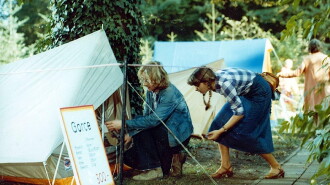
Jonas and Ines are in love and want to spend their vacation together camping on the Baltic coast. But Ines’s narrow-minded parents intervene and insist that the young couple joins the family vacation.
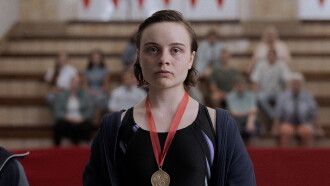
GDR, August 1989: Hanna and Andreas became a target of the secret police and had to give up their plans for their future studies and desired professions.
August 13, 1961: The passengers on the interzonal train from Munich to East Berlin learn 3½ hours before crossing the border that the Wall is being built in Berlin.
Iran 1979. The Islamic Revolution is shaking up the country. Dissident Omid, who lived for several years in the German Democratic Republic with his wife, chemical engineer Beate and their mutual daughter, hears the call from his homeland and returns to Teheran with high hopes and best intentions, bringing along his family.
A young half-breed boy, the son of a hockey player and an Indian woman, is adopted by a Jewish shopkeeper, but finds himself torn between the different cultures with which he comes into contact.
Coast Zone […] explores the use of deep-focus, contrasting background figures (often in motion) with those in the foreground (sometimes in extreme close-up).
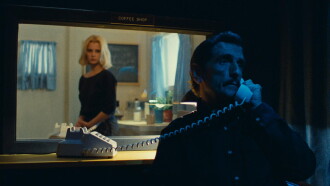
A man wanders out of the desert not knowing who he is. His brother finds him, and helps to pull his memory back of the life he led before he walked out on his family and disappeared four years earlier.
After losing their university jobs, three parapsychologists start a ghost-catching business in New York City and uncover a supernatural threat that could destroy the world.
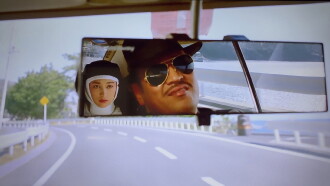
A cruel hitman nicknamed "Kamikaze" uses all kinds of methods to carry out his jobs. One day he will have to face an old enemy who has an old account pending with him.
Lou Reed and band (featuring guitar legend, Robert Quine) filmed in concert at Palacio de Municipal, Barcelona, Spain on December 10, 1984 during the New Sensations Tour.
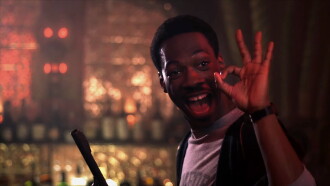
Fast-talking, quick-thinking Detroit street cop Axel Foley has bent more than a few rules and regs in his time, but when his best friend is murdered, he heads to sunny Beverly Hills to work the case like only he can.
Comments
Have you watched Ach du meine Liebe yet? What did you think about it?