About the black community in Ladbroke Grove and Notting Hill which grew up in the 1950s. “No Irish, no coloured, no dogs" read the rooms-to-let signs in what was already a decaying inner area of London. In the Grove black people had to face the brunt of a crude and brutal racism and a grassroots defence was organised against white racist attacks in 1958, to become part of the more general community resistance. And that strength was reflected in the emergence of several major 'Black Power' organisations. Since the 1960s the vital sense of black community which developed in the Grove has resisted attempts to disperse and weaken the community and in particular the attempt to suppress the annual Carnival - the major Afro-Caribbean event in Britain.
Award-winning filmmaker Byron Hurt explores what it means to be a Black man in America. Traveling to more than fifteen cities and towns across the country, Hurt gathers reflections on Black masculinity from men and women of a variety of socioeconomic backgrounds and a host of leading scholars and cultural critics.
What is the difference between a story and a good story? In this short documentary, ten of the greatest screenwriters in Brazil answer this and other questions, guiding us through the universe of creative writing and all its possibilities.
When an academic unearths a forgotten history, residents of the small township of Pukekohe, including kaumātua who have never told their personal stories before, confront its deep and dark racist past.
"The operations that dislocate a film like Summer Solstice– I hope irreparably– from being a movie about the locomotion and eating habits of cows, a dairy farm document, or what have you, are finally of a whole lot less concern to me than the following things: how it looks, the sense that probably it was done deliberately, the pleasure or displeasure– the intrigue, possibly– of attempting to retrieve the manner in which it was done while one is watching.
Eighteen-year-old Aaliyah flies on aerial silks. Her 16-year-old cousin Bre twirls on hoops. They dream of escaping the violence that marred their young lives.
César Menéndez confesses that he has lived and, at the same time, is a man condemned to paint. Through a brief tour we enter the interior of his work and his world, loaded with a great religious and sacrilegious metaphor, in the tradition of Luis Buñuel or Federico Fellini.
Popular movie trailers from 1984
These some of the most viewed trailers for movies released in 1984:
While ill and experiencing some difficulty in completing the editing of this film, Brakhage was reading the Marguerite Young novel, "Miss MacIntosh, My Darling.
Berlin in the early 1930s. Bello is an unemployed young man who loves the underage Frieda. In order to earn a living for both of them, Frieda goes on the streets.
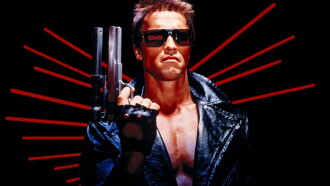
In the post-apocalyptic future, reigning tyrannical supercomputers teleport a cyborg assassin known as the "Terminator" back to 1984 to kill Sarah Connor, whose unborn son is destined to lead insurgents against 21st century mechanical hegemony.
Michał is among the soldiers quartered in a village near Lublin. By accident, he goes to the palace and visits the magnificent building, where he meets a widow Maria.
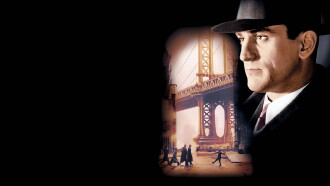
A former Prohibition-era Jewish gangster returns to the Lower East Side of Manhattan over thirty years later, where he once again must confront the ghosts and regrets of his old life.