The film deals with the judgment of the so-called "compromised", who integrated the colonial apparatus. At Josina Machel school, in an amphitheater with a full audience and balcony, there is a stage where Samora Machel and the members of the Frelimo political committee are located. He records Samora, an impeccable political actor, sometimes histrionic, in the role that he is attributed as the animator of the scene in the trial.
This documentary offers a deep, candid, and historical look at the Christian experience of America's largest and best-known tribes: the Dakota and Lakota.
The world knows the image of the good Canadian. But what if there was a dark secret behind a national identity? THE GOOD CANADIAN exposes the truth behind the idea of a True North strong and free.
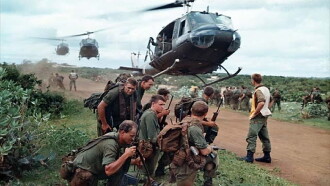
An account of the victims of the Sierra Leone Civil War and depicts the most brutal period with the Revolutionary United Front (RUF) rebels capturing the capital city on January 1999.
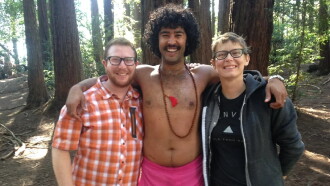
A documentary about stories of personal transformation and healing through yoga in the Queer, Trans, QTPOC communities from the lens of decolonizing yoga.
Based on powerful archival material documenting the most daring moments in the struggle for liberation in the Third World, this documentary is accompanied by classic text from The Wretched of the Earth by Frantz Fanon.
In the fifties, when the future Democratic Republic of Congo was still a Belgian colony, an entire generation of musicians fused traditional African tunes with Afro-Cuban music to create the electrifying Congolese rumba, a style that conquered the entire continent thanks to an infectious rhythm, captivating guitar sounds and smooth vocals.
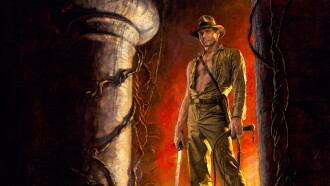
After arriving in India, Indiana Jones is asked by a desperate village to find a mystical stone. He agrees – and stumbles upon a secret cult plotting a terrible plan in the catacombs of an ancient palace.
A young half-breed boy, the son of a hockey player and an Indian woman, is adopted by a Jewish shopkeeper, but finds himself torn between the different cultures with which he comes into contact.
"Reverse Television" was created in the mid-1980's by video artist Bill Viola. The 30-second portraits were about portraiture and the idea of a person staring at the viewer (as the viewer stares at the TV screen).
A cruel hitman nicknamed "Kamikaze" uses all kinds of methods to carry out his jobs. One day he will have to face an old enemy who has an old account pending with him.
The criminalist Hannes Bergemann tries to blackmail the city where he spent his youth. After many years returning to the familiar places of his childhood, he hopes to meet again his old friends, especially Fred, Helmuth and Richard, with whom he had a close childhood friendship.
Berlin in the early 1930s. Bello is an unemployed young man who loves the underage Frieda. In order to earn a living for both of them, Frieda goes on the streets.
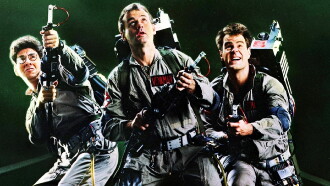
After losing their university jobs, three parapsychologists start a ghost-catching business in New York City and uncover a supernatural threat that could destroy the world.