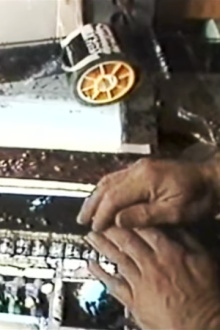
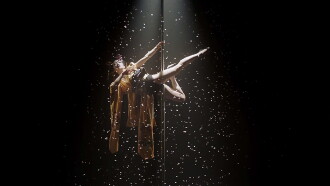
Stan Brakhage is a film maker whose work is shown mainly at film festivals. His work has been likened to poetry. Brakhage explains his techniques and his motivation.
a 32-minute color film by Gwen Brown, featuring precious footage of Living Theatre productions “Mysteries” and smaller pieces, “Paradise Now” and “Frankenstein.
Filmmaking icon Agnès Varda, the award-winning director regarded by many as the grandmother of the French new wave, turns the camera on herself with this unique autobiographical documentary.
This free-form film is a self-portrait, which revisits more than 40 years of the author’s filmography and questions the major stations of his life, while capturing the political tremors of the time.
After concluding the now-legendary public access TV series, The Pain Factory, Michael Nine embarked on a new and more subversive public access endeavor: a collaboration with Scott Arford called Fuck TV.
Godard by Godard is an archival self-portrait of Jean-Luc Godard. It retraces the unique and unheard-of path, made up of sudden detours and dramatic returns, of a filmmaker who never looks back on his past, never makes the same film twice, and tirelessly pursues his research, in a truly inexhaustible diversity of inspiration.
A film essay that intertwines the director's gaze with that of her late mother. Beyond exploring mourning and absence as exclusively painful experiences, the film pays tribute to her mother through memories embodied by places and objects that evidence the traces of her existence.
Anger discusses his Aleister Crowley-inspired theories of art: How he views his camera like a wand and how he casts his films, preferring to consider his actors, not human beings but as elemental spirits.
Women from the different Spanish regions dress in their traditional costumes to attend the triumphal parade celebrating the victory of Francisco Franco and the rebel side over the Second Republic in 1939; the deeds of past heroes are remembered; and a patriotic poem by Nicaraguan poet Rubén Darío is recited.
Popular movie trailers from 1985
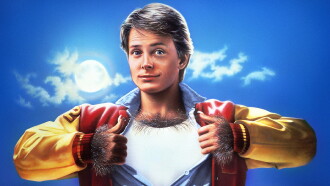
These some of the most viewed trailers for movies released in 1985:
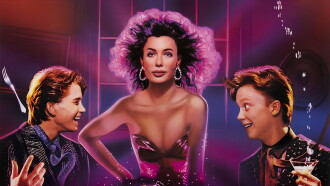
Two unpopular teenagers, Gary and Wyatt, fail at all attempts to be accepted by their peers. Their desperation to be liked leads them to "create" a woman via their computer.
"Barbara Hammer's Optic Nerve is a powerful personal reflection on family and aging. Hammer employs filmed footage which, through optical printing and editing, is layered and manipulated to create a compelling meditation on her visit to her grandmother in a nursing home.
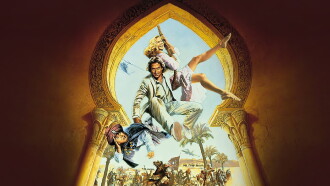
Joan Wilder is thrust back into a world of murder, chases, foreign intrigue... and love. This time out she's duped by a duplicitous Arab dignitary who brings her to the Middle East, ostensibly to write a book about his life.
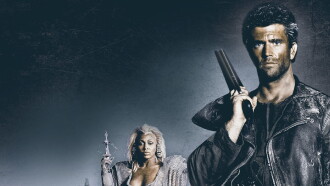
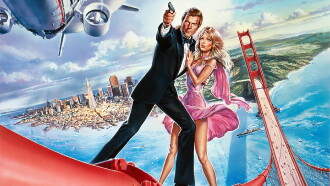
A newly-developed microchip designed by Zorin Industries for the British Government that can survive the electromagnetic radiation caused by a nuclear explosion has landed in the hands of the KGB.
In a summer in Shonan village, Sumiko is the daughter of an important upper-class Shikishima family, she loves to paint pictures, is going through a cooling-off of an arranged marriage that did not work out.
Eighties teenager Marty McFly is accidentally sent back in time to 1955, inadvertently disrupting his parents' first meeting and attracting his mother's romantic interest.
Comments
Have you watched Reflecting Thought: Stan Brakhage yet? What did you think about it?