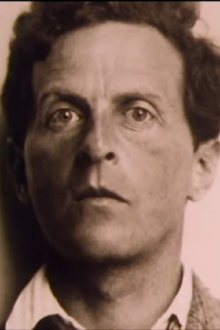
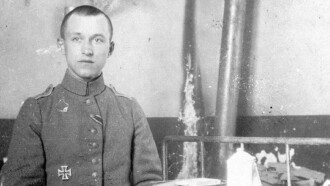
This is a film about Ludwig Wittgenstein and Arnold Schoenberg; two men whose lives and ideas run parallel in the development of Viennese radicalism. Both men emerged from the turmoil of the Habsburg Empire in its closing days with the idea of analyzing language and purging it with critical intent, believing that in the analysis and purification of language lies the greatest hope that we have. They never met and might never have fully understood one another, because while the nature of their genius they found themselves alone breaking new ground of the very frontiers of their respective disciplines. But their work springs from the same soil and shares a common ethical purpose, so that their ideas and methods echo and illuminate those of each other to a remarkable degree.
102 Years in the Heart of Europe: A Portrait of Ernst Jünger (Swedish: 102 år i hjärtat av Europa) is a Swedish documentary film from 1998 directed by Jesper Wachtmeister.
A two hour documentary on Johann Sebastian Bach. World-class musicians share their innermost thoughts and personal reflections on the power and genius of the most influential composer in history.
Documents the interpretations of Gustav Mahler's compositions by conductors Bernard Haitink, Riccardo Chailly, Riccardo Muti, Claudio Abbado, and Simon Rattle, who detail the special relationship they have with Mahler's work.
For the first 18 years of her life, Mozart’s sister shared equal billing with her brother. Musical partners and collaborators, Wolfgang Mozart and Maria-Anna Mozart played together before Kings and Queens, and were the talk of Europe.
Johan van der Keuken explains, "Some fifteen filmmakers were asked to make a film series in a relay style for a very popular variety program on Dutch television: each new program was to start from the last image of the previous program, developing the story from that image.
The impact of Marx on the 20th century has been all-pervasive and world-wide. This program looks at the man, at the roots of his philosophy, at the causes and explanations of his philosophical development, and at its most direct outcome: the failed Soviet Union.
Gives a brief overview of the history, geography, distribution of population, the political/social/economic systems, the Catholic Church, the military, and the problems in South America.
Paul Schulte takes a spa stay on the Baltic Sea to have his heart condition treated. His wife Barbara accompanies him and finds interest in the valuable art objects in a nearby church.
"Barbara Hammer's Optic Nerve is a powerful personal reflection on family and aging. Hammer employs filmed footage which, through optical printing and editing, is layered and manipulated to create a compelling meditation on her visit to her grandmother in a nursing home.