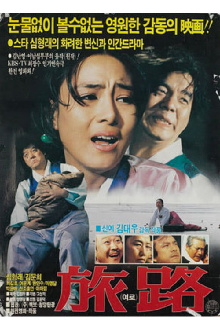
Boon-yi, a young woman from a poor family, is placed into a wealthy household through marriage to a mentally impaired man. Within the household, she endures a life of hardship and exploitation under the control of her father-in-law, while tensions with the rest of the family grow. After a series of events leads to the family’s downfall and her own expulsion, Boon-yi is forced to rebuild her life on her own. Years later, she finds a path toward reconciliation and returns to her hometown in a bittersweet reunion.
Imagine a surreal narrative, without dialogue, in a style reminiscent of the 1920s silent era and seen through the lens of moving voyeuristic camera that records the odd whereabouts of an unseemly group of marginal tenants.
Beate Klarsfeld, a German Protestant housewife, who, with the help of her Jewish law-student husband, Serge, begins an unrelenting campaign after World War II to bring Nazi war criminals to justice.
The weekly brass band rehearsal is an enjoyable, light-hearted occasion. Then Mathew, the conductor, introduces James, a newcomer to the village, who is an enthusiastic bandsman from the north, where they do these things properly.
After high school slacker Ferris Bueller successfully fakes an illness in order to skip school for the day, he goes on a series of adventures throughout Chicago with his girlfriend Sloane and best friend Cameron, all the while trying to outwit his wily school principal and fed-up sister.
What are Ilona Herfurt and her boyfriend Dietmar Freistrath doing in the old mine? Where does the money come from that her son Jimmy finds under the newspaper? Where have the unique and intricately carved works of art, often passed down for generations, disappeared to from the village in the Ore Mountains? What do the carver Gerlach and his foster daughter llona have to do with it? Questions upon questions that are burning under the detective's nails.
In this daring follow-up to The History of White People in America, comedian Martin Mull takes us on an in-depth look at such topics as White Religion, White Stress, White Politics, and White Crime.
Comments
Have you watched A Journey yet? What did you think about it?