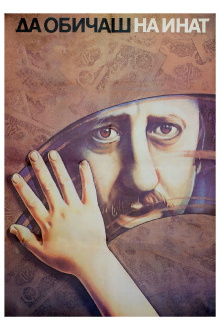
A middle-aged man makes every effort to provide for more or less decent life for his family. He is a driver who carries vegetables and fruits. He spends reasonable to save for his family and especially for his kid. Everything is all right until the day when the boy finds out that the part of the money have been made in indecent way. This revelation provokes a serious conflict in the family and the boy deserts his home. The man makes an attempt to put an end to his shady deals, but it turns out to be impossible. His 'employers' display exorbitant aggressiveness.
In this daring follow-up to The History of White People in America, comedian Martin Mull takes us on an in-depth look at such topics as White Religion, White Stress, White Politics, and White Crime.
This film deals with the contrasts of the Wilhelminian era in Berlin: the splendor of the monarchy, the economic and intellectual vitality of the up-and-coming imperial capital on the one hand, and the misery of the proletarians in the tenements on the other.
Playwright and director Nils Wijn brings his relationship issues to the stage. In his play "The Whore, the Virgin, and the Dying Man," he has his girlfriend Tessa appear in revealing lingerie and takes her to a real prostitute for some practical lessons.
The weekly brass band rehearsal is an enjoyable, light-hearted occasion. Then Mathew, the conductor, introduces James, a newcomer to the village, who is an enthusiastic bandsman from the north, where they do these things properly.
Nathaniel Box, a self-styled prophet, along with his daughter Barbara and her fiancé Curtis, holds a night time press conference in an underground car park, devoutly believing that "a new Messiah for a New Age" will appear there before dawn - and their wait does not go unrewarded.
Maria since childhood was directed by her father to become a nun. As a result of her father's cultivation of a rigid appreciation, Maria always feels awkward, including the delinquency that is common for a girl.