Lung is the first animation in Robert Darroll's Korean Trilogy. The title Lung refers to the Tibetan Buddhist concept of air-energy. While the images and movement would appear to be created on the computer, they are all hand drawn. The sequences take the viewer through meditative and transformative passages, as shapes and colors are dynamically orchestrated in time and space. Darroll studied Zen Buddhism at Songgwang Sa in Korea for two years. Lung is dedicated to the Zen Master Kusan Sunim.
In this film, Humbert is on the trail of his own history. Wolfsgrub is the name of the house where Humbert's mother lives, and though she is getting on in years, she becomes young again as she answers her son's questions.
This film deals with the contrasts of the Wilhelminian era in Berlin: the splendor of the monarchy, the economic and intellectual vitality of the up-and-coming imperial capital on the one hand, and the misery of the proletarians in the tenements on the other.
What are Ilona Herfurt and her boyfriend Dietmar Freistrath doing in the old mine? Where does the money come from that her son Jimmy finds under the newspaper? Where have the unique and intricately carved works of art, often passed down for generations, disappeared to from the village in the Ore Mountains? What do the carver Gerlach and his foster daughter llona have to do with it? Questions upon questions that are burning under the detective's nails.
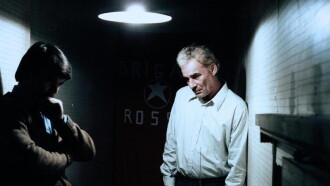
On March 16, 1978, far-left terrorists of the Red Brigades kidnap Aldo Moro, leader of the Christian Democracy, the ruling party in Italy since the end of WWII.
The weekly brass band rehearsal is an enjoyable, light-hearted occasion. Then Mathew, the conductor, introduces James, a newcomer to the village, who is an enthusiastic bandsman from the north, where they do these things properly.
Imagine a surreal narrative, without dialogue, in a style reminiscent of the 1920s silent era and seen through the lens of moving voyeuristic camera that records the odd whereabouts of an unseemly group of marginal tenants.
Beate Klarsfeld, a German Protestant housewife, who, with the help of her Jewish law-student husband, Serge, begins an unrelenting campaign after World War II to bring Nazi war criminals to justice.