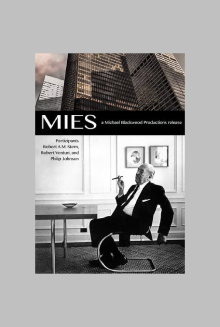
No understanding of the modern movement in architecture is possible without knowledge of its master builder, Mies van der Rohe. Together with documentation of his life, this film shows all his major buildings, as well as rare film footage of Mies explaining his philosophy. Phyllis Lambert relates her choice of Mies as the architect for the Seagram building. Mies's achievements and continuing influence are debated by architects Robert A.M. Stern, Robert Venturi, and Philip Johnson, by former students and by architectural historians. Mies is seen in rare documentary footage.
Schaub and Schindelm’s documentary follows two Swiss star architects, Jacques Herzog and Pierre de Meuron, on two very different projects: the national stadium for the Olympic summer games in Peking 2008 and a city area in the provincial town of Jinhua, China.
A film essay investigating the question of what “the West” means beyond the cardinal direction: a model of society inscribed itself in the Federal Republic of Germany’s postwar history and architecture.
What motivates people to organize communal living themselves? What ideals are behind it, how do they finance themselves, and how does life in a community work? Based on six self-managed residential buildings in Austria from the past 40 years, the documentary film "Der Stoff, aus dem Träume sind" (The Stuff Dreams Are Made Of) sets out to find answers.
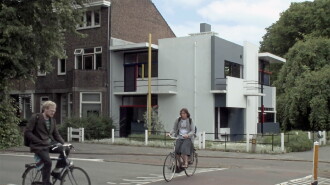
In 2024, the iconic Rietveld Schröder House in Utrecht will celebrate its 100th anniversary. Gerrit Rietveld designed and built the house in close collaboration with his secret lover and creative partner Truus Schröder.
Visiting examples of Herzog and de Meurons ground-breaking style, this film reflects their capacity to astonish and explore the way in which they transform what might otherwise be ordinary through new treatments and techniques.
Known for his bold, abstract and stark white buildings, American architect Richard Meier now takes on the challenge of building the Jubilee Church in Rome.
One billion people on our planet—one in six—live in shantytowns, slums or squats. Slums: Cities of Tomorrow challenges conventional thinking to propose that slums are in fact the solution, not the problem, to urban overcrowding caused by the massive migration of people to cities.
Alternative movies trailers for Mies
More movie trailers, teasers, and clips from Mies:
MIES 2K [trailer]
MIES a film by Michael Blackwood (1986 58 minutes color) Website: Amazon video: ...
Mies on Scene Trailer 1
The story of a building that changed the history of architecture. Its construction and subsequent reconstruction in two key moments of Barcelona immerse us in a ...
MIES ON SCENE (2018) - Trailer BG sub. Master of Art Film Festival
Може ли една сграда съществувала само 8 месеца през 1929 г да промени архитектурата завинаги? Краткият отгово...
LAHJATTOMAT - Mies ja majakka
Lahjattomat: Kai Tulonen (laulu) Tuomas Rislakki (kitara) Kim Vuori (koskettimet) Juha Nohteri (basso) Sami Sjöberg (rummut) Katariina Ilander ...
Mustapartainen mies - Tietämättömien talo
Vuodelta 1990. Ollin (Väinö Nuorteva) pakinaan perustuva tarina. Mukana Kalle Juurela (mustapartainen mies) Pentti Siimes (isäntä) Elina Pohjanpää ...
Mustapartainen mies - Iloinen yllätys
Vuodelta 1990. Ollin (Väinö Nuorteva) pakinaan perustuva tarina. Mukana Kalle Juurela (mustapartainen mies) Kauko Helovirta (kamreeri Jakari) ja Ritva ...
Popular movie trailers from 1986
These some of the most viewed trailers for movies released in 1986:
After high school slacker Ferris Bueller successfully fakes an illness in order to skip school for the day, he goes on a series of adventures throughout Chicago with his girlfriend Sloane and best friend Cameron, all the while trying to outwit his wily school principal and fed-up sister.
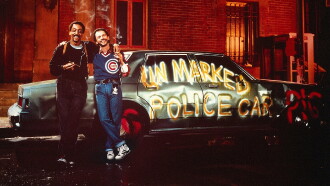
Two street-wise Chicago cops have to shake off some rust after returning from a Key West vacation to pursue a drug dealer that nearly killed them in the past.
14th-century Franciscan monk William of Baskerville and his young novice arrive at a conference to find that several monks have been murdered under mysterious circumstances.
What are Ilona Herfurt and her boyfriend Dietmar Freistrath doing in the old mine? Where does the money come from that her son Jimmy finds under the newspaper? Where have the unique and intricately carved works of art, often passed down for generations, disappeared to from the village in the Ore Mountains? What do the carver Gerlach and his foster daughter llona have to do with it? Questions upon questions that are burning under the detective's nails.
When Lucy Honeychurch and chaperon Charlotte Bartlett find themselves in Florence with rooms without views, fellow guests Mr Emerson and son George step in to remedy the situation.
In this film, Humbert is on the trail of his own history. Wolfsgrub is the name of the house where Humbert's mother lives, and though she is getting on in years, she becomes young again as she answers her son's questions.
Frustrated with babysitting on yet another weekend night, Sarah, a teenager with an active imagination, summons the Goblins to take her baby stepbrother away.