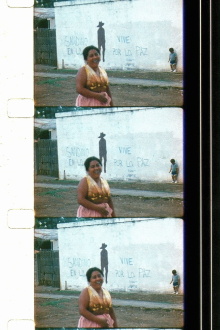
This film is a modest attempt to better understand a situation that my own country's government and media have mystified and depersonalized by reducing the representations of Nicaragua to a war zone rather than a place where people live their lives. Using the process of making the film as a starting point for my own engagement with my subject, a world so different from my own, I begin with a question: As a North American, what is my relationship to Nicaragua?
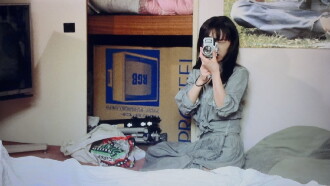
The true story of a pair of college students who attempted a double suicide to end their doomed romance becomes fare for legendary pinku-eiga director Hisayasu Sato in this feature.
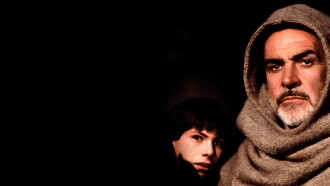
14th-century Franciscan monk William of Baskerville and his young novice arrive at a conference to find that several monks have been murdered under mysterious circumstances.
Something very common in our days, an adolescent who does not find communication with her mother or stepfather falls into a depression that drags her down paths of difficult return.
Milly and Louis, and their recently-widowed mom, Charlene, move to a new neighborhood. Once there, they all deal with a variety of personal problems, but Milly finds a friend in Eric, her autistic next door neighbor.
On March 16, 1978, far-left terrorists of the Red Brigades kidnap Aldo Moro, leader of the Christian Democracy, the ruling party in Italy since the end of WWII.
A film portrait that falls somewhere between a painting and a prose poem, a look at a woman’s daily routines and thoughts via an exploration of her as a “character”.
In this film, Humbert is on the trail of his own history. Wolfsgrub is the name of the house where Humbert's mother lives, and though she is getting on in years, she becomes young again as she answers her son's questions.
In this daring follow-up to The History of White People in America, comedian Martin Mull takes us on an in-depth look at such topics as White Religion, White Stress, White Politics, and White Crime.
This film deals with the contrasts of the Wilhelminian era in Berlin: the splendor of the monarchy, the economic and intellectual vitality of the up-and-coming imperial capital on the one hand, and the misery of the proletarians in the tenements on the other.
Comments
Have you watched Nicaragua: Hear-say/see-here yet? What did you think about it?