In the "Summer of Love," when Haight-Asbury was the center of the hippie universe, musicians began exploring the boundaries of rock and roll with free-form, blues-inspired song structures that reflected the social and political upheaval of the times. This psychedelic sound became the soundtrack for an unforgettable era.
The true story of a pair of college students who attempted a double suicide to end their doomed romance becomes fare for legendary pinku-eiga director Hisayasu Sato in this feature.
A film portrait that falls somewhere between a painting and a prose poem, a look at a woman’s daily routines and thoughts via an exploration of her as a “character”.
14th-century Franciscan monk William of Baskerville and his young novice arrive at a conference to find that several monks have been murdered under mysterious circumstances.
This film deals with the contrasts of the Wilhelminian era in Berlin: the splendor of the monarchy, the economic and intellectual vitality of the up-and-coming imperial capital on the one hand, and the misery of the proletarians in the tenements on the other.
Playwright and director Nils Wijn brings his relationship issues to the stage. In his play "The Whore, the Virgin, and the Dying Man," he has his girlfriend Tessa appear in revealing lingerie and takes her to a real prostitute for some practical lessons.
Plumber Martin and his younger colleague Frank are on call on Christmas Eve of all days. Frank's girlfriend Regina, who is expecting her first baby at any moment, is anything but thrilled.
In this film, Humbert is on the trail of his own history. Wolfsgrub is the name of the house where Humbert's mother lives, and though she is getting on in years, she becomes young again as she answers her son's questions.
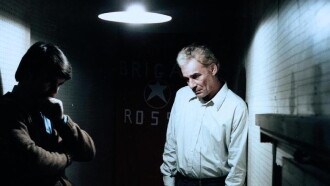
On March 16, 1978, far-left terrorists of the Red Brigades kidnap Aldo Moro, leader of the Christian Democracy, the ruling party in Italy since the end of WWII.
Comments
Have you watched Rock ‘N’ Roll Goldmine: The San Francisco Sound yet? What did you think about it?