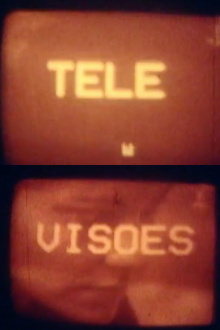
Encouraged to talk about what they watch on television, workers at the Santana Mill give their testimonies on the subject. One interviewee emphasizes the importance of being filmed and seeing herself on the screen. The opening of Globo's telenovela Selva de Pedra is repeated several times and some scenes from the plot are shown. Other scenes from Globo: Jornal Nacional, the American series Duro na Queda, and the opening of Fantástico. Man uses tractor battery to turn on TV. In the end credits, the director comes on stage and records her image handling pictures of the interviewees. The credits are presented "inside" a TV set. A TV set "planting" on the floor turns on the opening of the soap opera.
Beate Klarsfeld, a German Protestant housewife, who, with the help of her Jewish law-student husband, Serge, begins an unrelenting campaign after World War II to bring Nazi war criminals to justice.
In this film, Humbert is on the trail of his own history. Wolfsgrub is the name of the house where Humbert's mother lives, and though she is getting on in years, she becomes young again as she answers her son's questions.
Jessica's promising debut as a young artist is shattered by a sudden and violent death. She escapes into a restless succession of journeys whose encounters along the way bring humour, some comfort, but also danger.
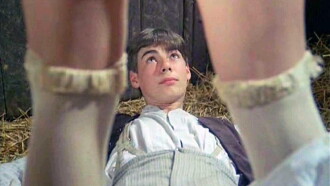
In 1914, sixteen year old Roger returned home from boarding school during vacation to find his puberty hit hard in a house filled with beautiful women.
For Lieutenant Pete 'Maverick' Mitchell and his friend and co-pilot Nick 'Goose' Bradshaw, being accepted into an elite training school for fighter pilots is a dream come true.
Imagine a surreal narrative, without dialogue, in a style reminiscent of the 1920s silent era and seen through the lens of moving voyeuristic camera that records the odd whereabouts of an unseemly group of marginal tenants.
Comments
Have you watched Tele-visões yet? What did you think about it?