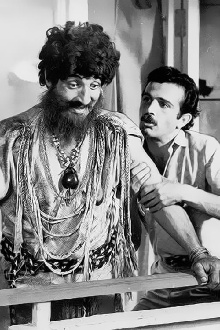
The events in the film take place in one of the modern cities. The editor-in-chief Rustam Agayev (Egit Iskenderov) finds an ancient lamp placed in the jaw. For the talented but poor character Rustam, this lamp shatters the sky. With the help of jinn, the young man suceeds: his play is made on anchor; his girlfriend, Maya (Natalia Tagiyeva), agrees to marry him, and the bar is in the apartment. But Rustam wants to achieve everything. When the jinn throws away his "owner," he unveils the secret: a person must believe in his own power, and there must be a strong desire to create miracles.
The sculptor Mahmud, an art student comes to his grandmother's village for vacation. He chooses his cousin Zumrad as a living model for his diploma work.
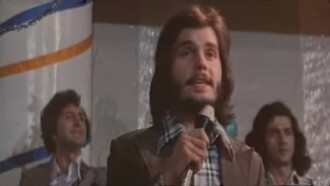
The film tells the story of a singer who is devoted to his friends and attached to the stage, valuing this more than his talent, vocal skills, and training in opera from professionals.
Two men shipwrecked on an island in the Caspian Sea are saved by members of a collective farm, where they work on its fishing boats and woo the young woman leading the fishermen.
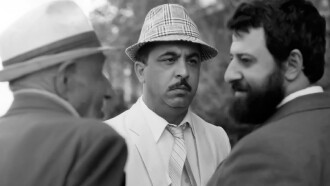
Film exposes the corruption and the decadence of the late Soviet bureaucracy in Azerbaijan SSR through the eyes of a naive Azerbaijani adult man, Hatem.
Popular movie trailers from 1986
These some of the most viewed trailers for movies released in 1986:
Jessica's promising debut as a young artist is shattered by a sudden and violent death. She escapes into a restless succession of journeys whose encounters along the way bring humour, some comfort, but also danger.
In this daring follow-up to The History of White People in America, comedian Martin Mull takes us on an in-depth look at such topics as White Religion, White Stress, White Politics, and White Crime.
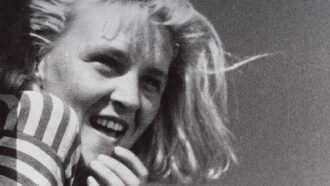
Something very common in our days, an adolescent who does not find communication with her mother or stepfather falls into a depression that drags her down paths of difficult return.
When Lucy Honeychurch and chaperon Charlotte Bartlett find themselves in Florence with rooms without views, fellow guests Mr Emerson and son George step in to remedy the situation.
A film portrait that falls somewhere between a painting and a prose poem, a look at a woman’s daily routines and thoughts via an exploration of her as a “character”.
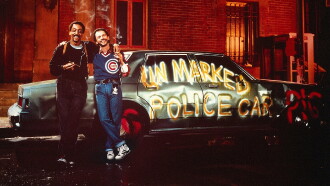
Two street-wise Chicago cops have to shake off some rust after returning from a Key West vacation to pursue a drug dealer that nearly killed them in the past.
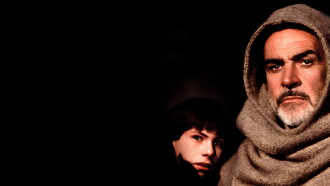
14th-century Franciscan monk William of Baskerville and his young novice arrive at a conference to find that several monks have been murdered under mysterious circumstances.
Comments
Have you watched The Jinn in Microdistrict yet? What did you think about it?