“The cinematic equivalent of flipping the bird, White Museum is an audacious and often hilarious early effort by master provocateur Mike Hoolboom. Viewers must wait about 30 minutes to see the one and only image in the film. In the meantime, Hoolboom expounds on everything from old lovers to making movies to living in the big city. With unabashed irony, he argues for a cinema without images, while simultaneously describing the images he would show if he had the cash. For a film that appears on the surface to be literally about nothing, White Museum becomes a veritable cornucopia of semiotic jokes and meanings, as well as a rich statement on the nature of cinema itself.” –Jason McBride, Canadian Film Encyclopedia
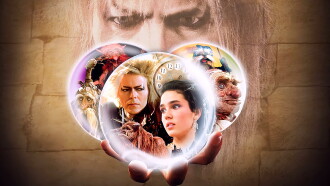
Frustrated with babysitting on yet another weekend night, Sarah, a teenager with an active imagination, summons the Goblins to take her baby stepbrother away.
What are Ilona Herfurt and her boyfriend Dietmar Freistrath doing in the old mine? Where does the money come from that her son Jimmy finds under the newspaper? Where have the unique and intricately carved works of art, often passed down for generations, disappeared to from the village in the Ore Mountains? What do the carver Gerlach and his foster daughter llona have to do with it? Questions upon questions that are burning under the detective's nails.
Playwright and director Nils Wijn brings his relationship issues to the stage. In his play "The Whore, the Virgin, and the Dying Man," he has his girlfriend Tessa appear in revealing lingerie and takes her to a real prostitute for some practical lessons.
Ripley, the sole survivor of the Nostromo's deadly encounter with the monstrous Alien, returns to Earth after drifting through space in hypersleep for 57 years.
Maria since childhood was directed by her father to become a nun. As a result of her father's cultivation of a rigid appreciation, Maria always feels awkward, including the delinquency that is common for a girl.
This film deals with the contrasts of the Wilhelminian era in Berlin: the splendor of the monarchy, the economic and intellectual vitality of the up-and-coming imperial capital on the one hand, and the misery of the proletarians in the tenements on the other.