The Finnish architect Alvar Aalto (1898–1976) is one of the great figures of modern architecture, ranked alongside Gropius, Le Corbusier and Mies van der Rohe. This film analyses Aalto’s uniquely successful resolution of the demands and possibilities created by new technology and construction materials with the need to make his buildings sympathetic both to their users and to their natural surroundings. His inventive use of timber in particular represents both a reference to the forest landscape of Finland and a building material that is ‘warm’ and extremely adaptable. Filmed in Finland, Italy, Germany and the USA, this documentary shows how the Finnish natural environment and art traditions were essential elements in Aalto’s pioneering harmonization of technology and nature.
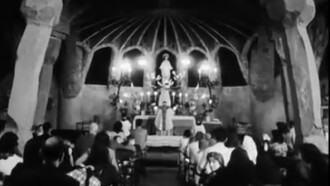
Dan Cruickshank explores one of Britain’s last Victorian country homes, Tyntesfield, a Gothic fantasy frozen in time and a monument to the Victorian age.
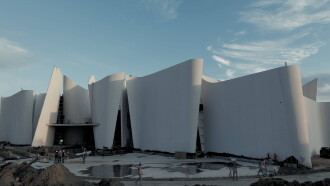
Arata Isozaki: Early Work in Japan takes a detailed look at the architect's pieces, exploring applauded projects such as the EXPO '70 Osaka Festival Plaza, Gunma Prefectural Museum of Modern Art and Kitakyushu Municipal Library.
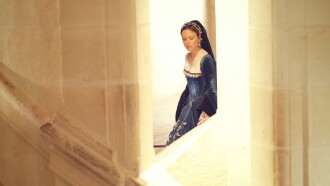
Chambord, the most impressive castle in the Loire Valley, in France, a truly Renaissance treasure, has always been an enigma to generations of historians.
A film essay contrasting the modern metropolis with its "golden age" from 1830-1930, with the participation of some of New York's leading political and cultural figures.
Founded in 1919 by Walter Gropius, Bauhaus was supposed to unite sculpture, painting, design and architecture into a single combined constructive discipline.
This film is a portrait of unique cultural space for Spirits, Gods and People. While permanent theatres are commonly built in most cosmopolitan modern cities, Hong Kong preserves a unique theatrical architecture, a Chinese tradition that has lasted more than a century - Bamboo Theatre.
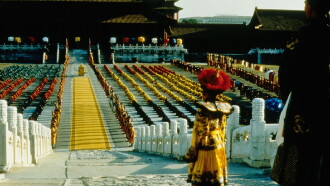
A dramatic history of Pu Yi, the last of the Emperors of China, from his lofty birth and brief reign in the Forbidden City, the object of worship by half a billion people; through his abdication, his decline and dissolute lifestyle; his exploitation by the invading Japanese, and finally to his obscure existence as just another peasant worker in the People's Republic.
A pragmatic U.S. Marine observes the dehumanizing effects the U.S.-Vietnam War has on his fellow recruits from their brutal boot camp training to the bloody street fighting in Hue.
Andy’s friends confront both their own mortality and the deadly new disease stalking their community, while his conservative family grapples with never having come to terms with his sexuality.
This film recounts the murder of Vincent Chin, an automotive engineer mistaken as Japanese who was slain by an assembly line worker who blamed him for the competition by the Japanese auto makers that were threatening his job.
Compared to the film "Lupus" Catch me, I'll tell you" Lupus' entourage is more depicted. But just like the previous film, this film is still a combination of humor that stems from the mischief of Lupus et al.
Expecting the usual tedium that accompanies a summer in the Catskills with her family, 17-year-old Frances 'Baby' Houseman is surprised to find herself stepping into the shoes of a professional hoofer—and unexpectedly falling in love.
Comments
Have you watched Alvar Aalto: Technology and Nature yet? What did you think about it?