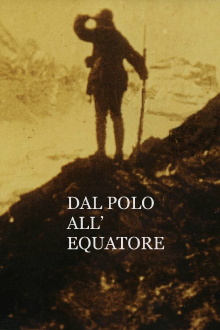
The title Dal polo all'equatore was first used by the pioneering documentary maker, Luca Comerio, for a compilation film of 1925; it was used again by Yervant Gianikian and Angela Ricci Lucchi for their film of 1985. Much of the original has been re-worked: the 'found footage' has been re-shot, slowed down, tinted, and re-edited with a sound track of minimalist composition. As a result, the exotica of colonial travel and sport take on new and sinister meanings. The acts of violence, especially those of hunting, recur in patterns that suggest visually that war is a logical development. A close examination of the work, starting with the opening sequence of a railway journey, explores the centrality of questions of memory and history to this remarkable and influential film.
A true Canadian iconoclast, acclaimed transgender country/electro-pop artist Rae Spoon revisits the stretches of rural Alberta that once constituted “home” and confronts memories of growing up queer in an abusive, evangelical household.
A portrait of a small Georgian village filmed across the seasons, that focuses on family intricacies and working the land in a timeless place of transience and refuge.
Home movies, photographs, and recited poetry illustrate the life of Tupac Shakur, one of the most beloved, revolutionary, and volatile hip-hop MCs of all time.
As a visually radical memoir, CAMERAPERSON draws on the remarkable footage that filmmaker Kirsten Johnson has shot and reframes it in ways that illuminate moments and situations that have personally affected her.
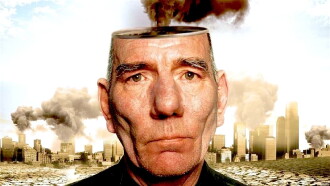
Pete Postlethwaite stars as a man living alone in the devastated future world of 2055, looking at old footage from 2008 and asking: why didn’t we stop climate change when we had the chance?
On October 23, 1998, a sniper carrying a high-powered rifle assassinated Dr. Barnett Slepian in his home, altering forever a family, a community, and the bounds of our imaginings about anti-abortion violence.
An educational documentary spanning two continents, opening up a much-needed debate about traditional African spiritual systems; their cosmologies, ideologies and underlying ethical principles.
Andy’s friends confront both their own mortality and the deadly new disease stalking their community, while his conservative family grapples with never having come to terms with his sexuality.
After a defecting Russian general reveals a plot to assassinate foreign spies, James Bond is assigned a secret mission to dispatch the new head of the KGB to prevent an escalation of tensions between the Soviet Union and the West.
This film recounts the murder of Vincent Chin, an automotive engineer mistaken as Japanese who was slain by an assembly line worker who blamed him for the competition by the Japanese auto makers that were threatening his job.
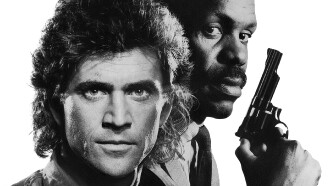
A veteran cop and an unstable detective become partners who must put their differences aside in order to bring down a heroin-smuggling ring run by ex-Special Forces.
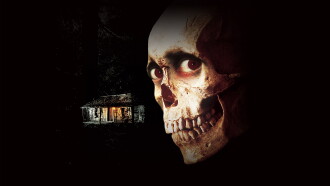
Ash Williams and his girlfriend Linda find a log cabin in the woods with a voice recording from an archeologist who had recorded himself reciting ancient chants from "The Book of the Dead.
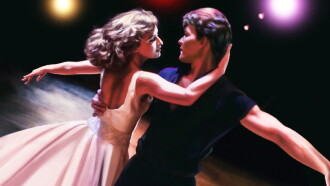
Expecting the usual tedium that accompanies a summer in the Catskills with her family, 17-year-old Frances 'Baby' Houseman is surprised to find herself stepping into the shoes of a professional hoofer—and unexpectedly falling in love.
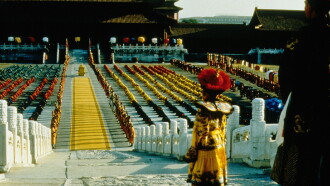
A dramatic history of Pu Yi, the last of the Emperors of China, from his lofty birth and brief reign in the Forbidden City, the object of worship by half a billion people; through his abdication, his decline and dissolute lifestyle; his exploitation by the invading Japanese, and finally to his obscure existence as just another peasant worker in the People's Republic.
Comments
Have you watched From the Pole to the Equator yet? What did you think about it?