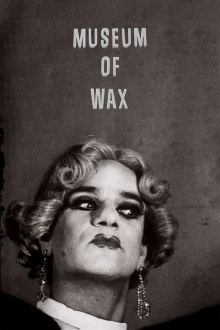
The black-and-white, silent short, Museum of Wax (1981-1987), is the more classically structured of Ludlam’s recovered films. Fluently adopting a silent-era cinematic language, the vaudevillian narrative follows an escaped prisoner (Ludlam) who seeks refuge in a Coney Island wax museum. The set-up is a clever ploy to involve the rows of wax puppets (and boxes of celebrity heads) in a whimsical deracination of gender conventions.
A story spanning three generations, from 1871 to 1945. When Gustav Wengler, a farmer’s son, returns from the Franco-German war in 1871, he goes to work for a precision mechanics and optical company, where he soon becomes a master craftsman.
Documentary filmmaker Christian Blackwood profiles controversial Filipino director Lino Brocka, detailing his rags-to-riches rise in the mainstream film industry of the Philippines.
This is the story of Lenell Geter, an engineer who was accused and convicted of armed robbery. Because he had such faith in the system, he thought that he would eventually be released.
This time, Leon Schuster plays a filmmaker who is making a candid camera movie, only to discover that another filmmaker has stolen his ideas and is making the identical picture.
In a satirical way, the typical television coverage after a (fictitious) state election is simulated — including projections, interviews, commentaries, and a so-called “heavyweight round”.
The 2004 Opus Arte DVD release of Wolfgang Amadeus Mozart's Don Giovanni (recorded at Teatro alla Scala in 1987) is highly regarded by English-language critics as a definitive "traditional" production, notable for its legendary collaboration between conductor Riccardo Muti and director Giorgio Strehler.
Comments
Have you watched Museum of Wax yet? What did you think about it?