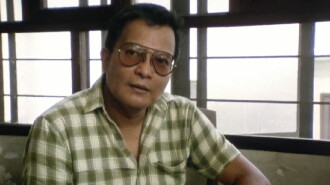
Ñakaj is a short film made in 1987 by Gabriela Martínez Escobar and Daniel Aizenstat, based on Andean beliefs. The term "ñakaj" is mostly used in the Cusco region of Peru, while in other areas, such as the central highlands, the term "pishtaco" is used. The ñakaj is a character who steals human fat to sell to Dominican friars. This story is connected to the colonial era and possibly the Inquisition. The film was made by experimenting with blending documentary and fiction, something innovative for its time; it was filmed entirely in the citadel of Machu Picchu.
A robot messenger is sent to earth to appeal to humans to live in peace. Originally designed to go to MIT, by mistake she ends up in Amman, Jordan during the Black September riots of 1970.
Andy’s friends confront both their own mortality and the deadly new disease stalking their community, while his conservative family grapples with never having come to terms with his sexuality.
A young woman marries a rich man and begins a new life in a little town in the Spain of the 20s. Feeling trapped and bored, she begins a relationship with her husband's stepbrother.
Life After Death explores the ultimate unknown through the beliefs of various cultures. Hear what people have to say who have had near-death experiences.
In this enchantingly cracked fairy tale, the beautiful Princess Buttercup and the dashing Westley must overcome staggering odds to find happiness amid six-fingered swordsmen, murderous princes, Sicilians and rodents of unusual size.
Expecting the usual tedium that accompanies a summer in the Catskills with her family, 17-year-old Frances 'Baby' Houseman is surprised to find herself stepping into the shoes of a professional hoofer—and unexpectedly falling in love.
To mark the conclusion of their "Third World Week" celebration, a cricket team in a small English village invites a black cricket team from South London to a charity game with comical results.