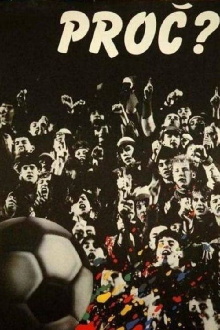
Why? (Czech: Proč?) is a 1987 Czechoslovak drama film directed by Karel Smyczek. It was screened in the Un Certain Regard section at the 1988 Cannes Film Festival. The film deals with the hooliganism in Czechoslovakia, particularly with the fans of football club Sparta from Prague, whose supporters were the pioneers of the football fan riots in Czechoslovakia, starting with hooligan actions already in the 1960s, like breaking the trains in which they travelled when they went on Sparta's away games. The film deals with one of such episodes
A short film depicting a dad's influence on a young boy's life. His judgmental character mixed with the boys fondness for his dad prove to be a toxic mix that tears away at a world of opportunity and experiences.
The bitter rivalry between the fans of Zagreb's flagship football club Dinamo and Split's Hajduk brings a father and his estranged son closer together, costs a man his life and creates violence in the life of a stay-at-home mother.
Growing up on an estate filled with drugs, guns and football hooligans isn t easy for Justin. When he starts hanging out with a nasty gang headed by loud-mouthed drug dealer Kevin he is persuaded to beat up an innocent bystander just for kicks and starts to enjoy the hooligan lifestyle.
Through the socio-political overview of the problematic structure of fan clubs and football supporters in Serbia, this movie focuses on a particular case of an incident involving a French citizen - football fan in Belgrade, which led to 12 young people being convicted to 240 years of prison.
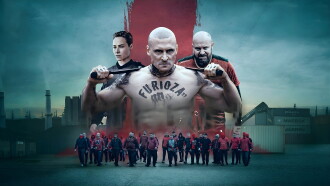
NON PLUS ULTRAS is a comedy with a social subtext. It takes a satirical look at a short stretch in the life of five "fans" of one Prague football club who belong to the hardcore supporters - ultras or hooligans.
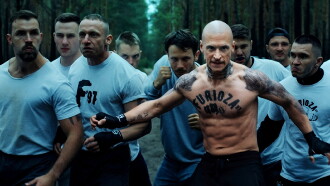
Tony was the leader of a notorious London Hooligan firm, but whilst fighting a Russian ultra he sustains a head injury and must sit out some of the fun.
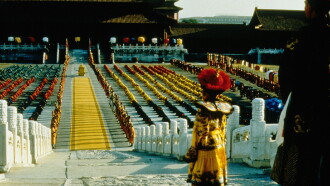
A dramatic history of Pu Yi, the last of the Emperors of China, from his lofty birth and brief reign in the Forbidden City, the object of worship by half a billion people; through his abdication, his decline and dissolute lifestyle; his exploitation by the invading Japanese, and finally to his obscure existence as just another peasant worker in the People's Republic.
A newlywed couple arrive at their hotel only to be held captive by a criminal who's bombed the parking garage and has another ticking time bomb in this Greek shot-on-video comedy.
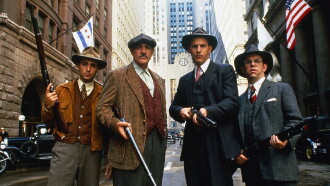
Elliot Ness, an ambitious prohibition agent, is determined to take down Al Capone. In order to achieve this goal, he forms a group given the nickname “The Untouchables”.
Life After Death explores the ultimate unknown through the beliefs of various cultures. Hear what people have to say who have had near-death experiences.
In a soon to be demolished block of apartments, the residents resist the criminal methods used to force them to leave so a greedy tycoon can build his new skyscraper.
This film recounts the murder of Vincent Chin, an automotive engineer mistaken as Japanese who was slain by an assembly line worker who blamed him for the competition by the Japanese auto makers that were threatening his job.
Andy’s friends confront both their own mortality and the deadly new disease stalking their community, while his conservative family grapples with never having come to terms with his sexuality.
After a defecting Russian general reveals a plot to assassinate foreign spies, James Bond is assigned a secret mission to dispatch the new head of the KGB to prevent an escalation of tensions between the Soviet Union and the West.
Comments
Have you watched Why? yet? What did you think about it?