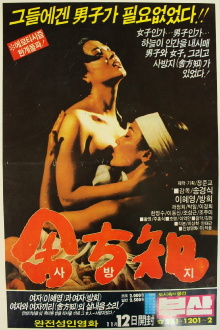
Sa Bangji was an intersex person who according to historical records lived during Korea’s Joseon Dynasty. Taken in by a kindly benefactor, Sa Bangji lives in a monastery that is one day visited by a young widow, Lee So-sa, who is in mourning following the death of her husband. The pair’s meeting seems predestined, with the erotic attraction between Sa Bangji and Lee So-sa soon evolving into something far more transcendent – and dangerous. While aspects of the film – its stylised depiction of female actors and sex – identify it as a product of its time, Sa Bangji is undeniably a milestone in screen representations of intersex people, a film that refuses to shy away from the horrendous stigmatization faced by its titular character.
Hiromi Katori, a new employee, felt unwell during work and went to the infirmary. Then, instead of the usual Maki Kitagawa, the person there was Hanako Minamida, a flashy middle-aged stranger.
There is a visitor for local herb gatherer Doggie who has no particular need or greed for anything. His friend Chang-guk who is wanted to failure in his business and his captivating wife Seon-hwa come to see Doggie who has no choice but to give them a place to hide.
After graduating from college, Minji, whose goal is to meet and marry a man with a lot of money rather than a job, spends more time in the club than in the library and lives every day.
Two sexually energized young women who live in a high-rise apartment building happen one day to spy from their window a mother and son making love in the apartment across from theirs.
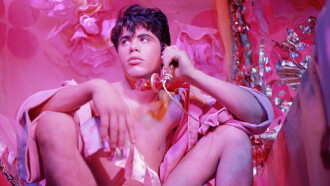
An outrageous erotic poem focusing on the daydreams of a beautiful boy prostitute who, from the seclusion of his ultra-kitsch apartment, conceives a series of interlinked narcissistic fantasies populated by matadors, dancing boys, slaves, and leather-clad bikers.
A certain high school. There was a boy who was being bullied in class. The hot-blooded teacher who has just been transferred to the school fights head-on with the bullies in his class to save the boy.
Alternative movies trailers for Sa Bang-ji
More movie trailers, teasers, and clips from Sa Bang-ji:
사방지 Sabangji (1988 )
Sa Bang-ji full hd movie trailer.
Popular movie trailers from 1988
These some of the most viewed trailers for movies released in 1988:
A woman, who has been the mistress of a man who has just died, thinks about leaving the little Italian village where they lived and moving to another place.
Skin and Bones gently introduce us to the world of anorexia and bulimia. The heroines of this moving film in which reality and fiction merge are called Annie, Andréanne, Hélène, Eisha.
American cowboys have been writing poetry for over a century. This little-known literary tradition both belies the macho image of the Western heroes and serves as an imaginative form of oral history.
When a young boy makes a wish at a carnival machine to be big, he wakes up the following morning to find that it has been granted and his body has grown older overnight, but he is still the same 13-year-old boy inside.
Putting its own 'twist' on the story of Oliver Twist, the orange runt of a litter of kittens must fight for survival on the rough streets on New York City, finding unlikely friends in the dogs owned by a down-on-his luck man named Fagin.