The Obersalzberg was an ordinary Bavarian mountain until Adolf Hitler discovered it in 1923. There at the Berghof, the Nazi leader spent his time surrounded by his most faithful lieutenants and his mistress, Eva Braun.
Four young women joined the Resistance to fight Nazi oppression and brutality in occupied France. They were arrested and deported to Ravensbruck concentration camp, where they helped each other to survive.
In 1937 the Nazi regime held two exhibitions in Munich: one to stigmatize “Degenerate Art” (which they systematically looted and destroyed) and one, personally curated by Hitler, to glorify “Classic Art”.
Carefully chronicling in great detail the early years of Hitler's political life until his fall as the leader of Germany, this archive-footage documentary offers a sharply critical insight into the stealthy rise of the Nazi party and how it's racist vision of the world slowly took hold in a disillusioned Germany.
Army Air Force produced documentary with footage of the IX Troop Carrier Command and the "Path Finders" and "Glider Rider" that were part of the airborne portion of the Allied invasion of Normandy.
Skin and Bones gently introduce us to the world of anorexia and bulimia. The heroines of this moving film in which reality and fiction merge are called Annie, Andréanne, Hélène, Eisha.
The real horror is worse than - than a horror film, worse than - than the worst horror film. A story about some who are producing horror and special effects.
Two sisters move to the country with their father in order to be closer to their hospitalized mother, and discover the surrounding trees are inhabited by Totoros, magical spirits of the forest.
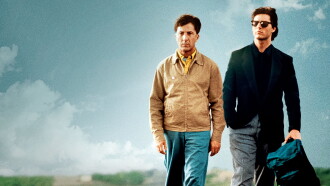
When car dealer Charlie Babbitt learns that his estranged father has died, he returns home to Cincinnati, where he discovers that he has a savant older brother named Raymond and that his father's $3 million fortune is being left to the mental institution in which Raymond lives.
The short film, a collaboration between the multimedia research group Giovanotti Mondani Meccanici and Loretta Mugnai, combines both film and electronic elements.
The image of Greater Poland in the breakthrough years 1913-1918. It tells about the fate of Polish junior high school students and their attitude towards the Prussian partitioning authorities, activity in the independence underground, and participation in the preparations for the Greater Poland Uprising.