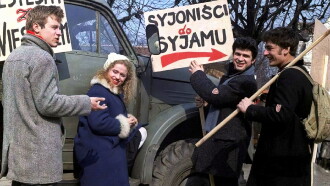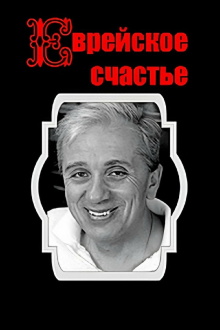
The hero of the film, Mark, the last of the old Jewish family living in Russia and then in the USSR, emigrates to his historical homeland in the early 90s. Under a formal pretext, before leaving, Mark literally comes to the small town where his childhood was spent for one day.
This tribute to Myrna Loy is organized chronologically with a few photographs, many film clips, a handful of personal appearances, and a detailed commentary delivered on camera by Kathleen Turner.
"I have not been very active as a social filmmaker anymore after the revolution, though I had great plans and projects at the start of the revolution! So far I have made many so-called commissioned industrial films for national oil, gas, and steel companies as well as for government ministries, in which I tried to bring the films as close as possible to my taste and to my way of thinking and make the films' sponsors to see the world from content and formal viewpoints.
Andreas, who is ten, has been brought up by his grandmother. When she dies, he removes a putto from the crucifix placed upon her, puts it in his mouth and does not speak again.
Otto is turning 65 and a big celebration with relatives and friends is coming up. What does life bring? A comfortable retirement, looking after his beloved grandchildren, lamenting the aches and pains of old age.
Clarence Flamer hosts a late-night talk show on regional radio station North Star Sound. A phone call he takes one night leads to his discovering a mortgage scam being run by a group of estate agents.
As he gradually turns mad, the dancer Nijinsky evokes the important episodes of his life. In costumes and sets of lush beauty, the divine puppet performs in a final show where the secondary characters are named: Diaghilev, Isadora Duncan, Stravinsky, Auguste Rodin, Léon Bakst.