Libyan film based on a work by Ahmad Ibrahim al-Faqih. The film's events revolve around an Arab woman, her status and varying roles, examined through a historical evocation of the poet Layla al-'Amiriya.
A troubled Southern man talks to his suicidal sister's psychiatrist about their family history and falls in love with her (and New York City) in the process.
The story of John Wilmot, a.k.a. the Earl of Rochester, a 17th century poet who famously drank and debauched his way to an early grave, only to earn posthumous critical acclaim for his life's work.
Famed swordsman and poet Cyrano de Bergerac is in love with his cousin Roxane. He has never expressed his love for her as he his large nose undermines his self-confidence.
A biography about Ahmed Fouad Negm, the famous poet of the Egyptian colloquial, depicting the important historical and revolutionary stages, from his struggle fighting the English occupation and political oppression, to his imprisonment and his relationship with his companion the composer Sheikh Imam Issa.
A defrocked Episcopal clergyman leads a bus-load of middle-aged Baptist women on a tour of the Mexican coast and comes to terms with the failure haunting his life.
Popular movie trailers from 1990
These some of the most viewed trailers for movies released in 1990:
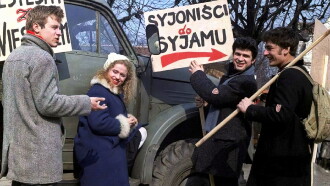
Young people living in Poland in the late 1960s had to face difficult times and make tough choices. Some of them were forced to leave their country for having Jewish origin.
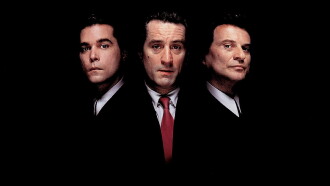
The true story of Henry Hill, a half-Irish, half-Sicilian Brooklyn kid who is adopted by neighbourhood gangsters at an early age and climbs the ranks of a Mafia family under the guidance of Jimmy Conway.
A village has to be destroyed for coal mining. Henning, a 15 years old boy, who wants to visit his grandfather one more time, realizes that nothing will be the way it used to be.
The secretive realm of the world's deadliest ninja warriors is thrown into chaos as one by one, ninja clan leaders are brutally assassinated! What fiendish foe has the power to kill the most dangerous men in the world? To avenge their dead leader, three ninjas must face this hidden enemy.
The boisterous good humor of Jurmala, the nickel-mine owner, is, if anything, only barely dented by the raging battles in Finland before, during and after World War Two.
Comments
Have you watched Searching for Layla al-'Amiriya yet? What did you think about it?