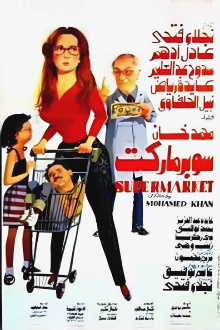
Ramzi is a principled musician who lives in his inlaws house. He plays the piano in a resort to make a living. When his sister in law, who hates music, kicks him out, he moves back to his mother's department, and meets Amira, a childhood friend
Zuhra has nothing to do but to runaway after her family forced her to marry an old rich man. She goes to Alexandria where she works in a motel and there she meets people with different ideologies and thoughts about life.
Qinawi, a physically challenged peddler who makes his living selling newspapers in the central Cairo train station, is obsessed with Hanuma, an attractive young woman who sells drinks.
Set in the suburbs of Cairo in the late 1930s, the story follows a middle-class Egyptian family grappling with the hardships of life after the death of their father, their sole breadwinner.
Murad Salem is a rich man who is used to getting what he wants whenever he wants it. When he meets a beautiful woman in Alexandria, he wants her as wife number thirteen.
Set in 1881, a year before the start of British colonial rule, it is based on the true story of the Abd el-Rasuls, an Upper-Egyptian clan that had been robbing a cache of mummies they have discovered at tomb DB320 near the village of Kurna, and selling the artifacts on the black market.
Based on Tharwat Abaza's short story, 'Shey min al Khawf' takes place in a rural Egyptian village. Atris' reign of terror on the villagers is put to the test when a public act of defiance is carried out by Fu'ada, the object of his affection.
This half-hour BBC documentary offers a revealing look at Svankmajer at work on "Death of Stalinism in Bohemia," and uses excerpts from his earlier films to trace the development of his unique sensibility.
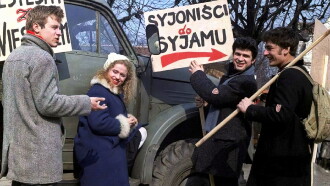
Young people living in Poland in the late 1960s had to face difficult times and make tough choices. Some of them were forced to leave their country for having Jewish origin.
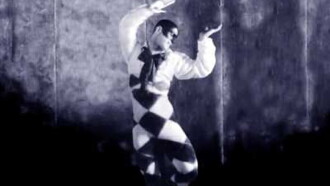
As he gradually turns mad, the dancer Nijinsky evokes the important episodes of his life. In costumes and sets of lush beauty, the divine puppet performs in a final show where the secondary characters are named: Diaghilev, Isadora Duncan, Stravinsky, Auguste Rodin, Léon Bakst.