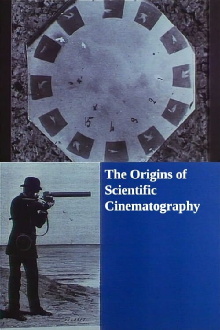
THE ORIGINS OF SCIENTIFIC CINEMATOGRAPHY is a documentary film series directed by Virgilio Tosi. The films complement Tosi’s book Cinema Before Cinema, using archive film and original equipment to show how cinematography had its origins not in the music hall or the fairground, but in the laboratory, as scientists of the 19th and early 20th centuries attempted to find new ways of seeing and measuring the natural world.
With his nephews and niece, everyone's favorite rich uncle, Scrooge McDuck, treks from his mansion home in Duckburg in search of the long-lost loot of the thief Collie Baba.
As he gradually turns mad, the dancer Nijinsky evokes the important episodes of his life. In costumes and sets of lush beauty, the divine puppet performs in a final show where the secondary characters are named: Diaghilev, Isadora Duncan, Stravinsky, Auguste Rodin, Léon Bakst.
In 1973 Vietnam, gas bombs are dropped on villages, killing men, women, and children. Two downed American pilots, accused of the bombings, are captured and tortured.
On a West German Autobahn, Robert plummets from a bridge and is hospitalized. As he recovers, he flashes back to a Bulgarian holiday where he met Jutta and her uncle Lothar, who’d ordered a West German passport to smuggle her out of the DDR.
Three part anthology with stories involving a Phantom of the Opera-style killer haunting a theater, four punks who pick the wrong house to rob and a man on the hunt for Bigfoot.
Comments
Have you watched The Origins of Scientific Cinematography yet? What did you think about it?