Some footage and shots of expressionless actresses seen in Ravissements are repurposed in La philosophie dans le boudoir / Philosophy in the Boudoir (1991), wherein Smolders takes extracts from the Marquis De Sade’s nutbar text and applies them to scenes of a man in a prison cell, and single or groups of women often standing with the same blank expressions as the man. Perhaps to characterize De Sade’s libertine philosophy and rude text as words and ideas worthy of anyone, Smolders alternates his actors, with several men portraying (presumably) the incarcerated De Sade.
A luxury home, a handsome husband and terrific children. But it all comes crashing down when she is accused of being a mastermind behind a brutal triple-homicide and is arrested and handcuffed in front of her own children.
Featuring Arnold and Ahneva from Wendy Clarke's One on One video series, this video dialogue deeply connects the pair through discussion of Black brother and sisterhood.
Looks at the United States as it becomes an increasingly diverse nation. Tracing the history of significant changes in the Immigration and Nationality Act beginning in 1965, this program introduces a dramatic vision of a multi-cultural America where people of color are the new majority.
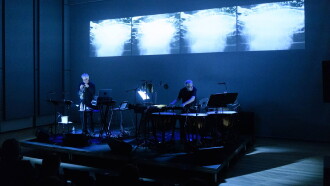
ITSOFOMO (In the Shadow of Forward Motion) is a multimedia performance collaboration created by artist David Wojnarowicz and composer/musician Ben Neill in 1989.
Reiko, a female college student, was looking outside with her newly purchased telescope. She bought it impulsively, but since she had no intention of using it, she looked around the neighborhood.
Documentary about the making of The Changer and The Changed, an album recorded by Cris Williamson in 1975 that became one of the icons of women's music.
Comments
Have you watched La philosophie dans le boudoir yet? What did you think about it?