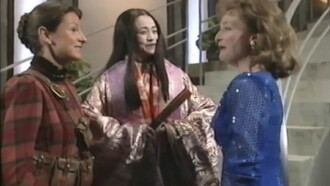
"Hi Steve" and "Dear Robert" exchanged between two filmmakers: Robert Kramer and Stephen Dwoskin. "The Videoletters strip away the formalities that had littered our work and thinking. Through the making of the 'video letters' we started to relearn and re-look.". The Videoletters provide the benefits of reflection -- a lubricant for thought made out of very basic stuff -- the reduction of complexity -- and they cemented a brotherhood. Sadly, Robert's untimely death prevented the continuation of the "video letters" and they remain unfinished and unedited. (S.D.)
For fans of history, this glimpse of Munich society in the 1920s will be a much-treasured event. The story revolves around an art-gallery manager who puts on a show featuring the scandalous works of a woman artist who committed suicide.
Documentary about the making of The Changer and The Changed, an album recorded by Cris Williamson in 1975 that became one of the icons of women's music.
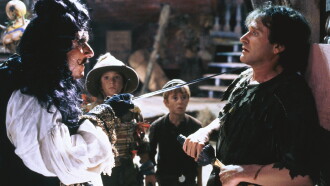
The boy who wasn't supposed to grow up—Peter Pan—does just that, becoming a soulless corporate lawyer whose workaholism could cost him his wife and kids.
Looks at the United States as it becomes an increasingly diverse nation. Tracing the history of significant changes in the Immigration and Nationality Act beginning in 1965, this program introduces a dramatic vision of a multi-cultural America where people of color are the new majority.
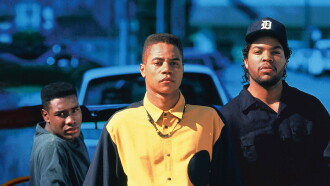
Three friends growing up in South Central Los Angeles navigate a neighborhood plagued by violence, unemployment, and crime, each responding differently to the harsh realities of street life.
The tumultuous life of the controversial 1960s black revolutionary (and convicted murderer) Michael X is illustrated by a kaleidoscopic melding of sound and images.
Comments
Have you watched Vidéolettres / Videoletters yet? What did you think about it?