ince the 1970s, Robakowski has been experimenting with the category of the author, transferring the authorship of his works onto the film camera. Implementing the strategy of biological-mechanical records, Robakowski continues his experiments, carried out since the 1970s, consisting in the transfer of the authorship of the film onto the film camera, as well as initiates relations between the mechanical medium and the human organism. On the one hand, it embraces collaboration, on the other, human struggle with the machine, extending from the “integration” of its logic and the attempts at its “anthropomorphisation”.
While investigating her late parents’ involvement with the Anglo Iranian Oil Company (BP), the filmmaker comes across the letters of a petroleum geologist in Iran in the 1930s who was later to embark on a search for the origins of civilisation.
CRISP., wherein a jealous man's attempt to steal a delicious apple crisp causes reality to break down and begins a chain of events leading to an endless cyclical loop of jealousy and theft.
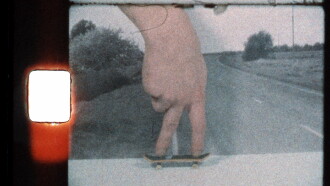
Skating is cool. Super 8 films too. Fuck-shit! That was dope! // "Super (8) Skate" is a Stop-Motion short, shot on Super 8 film to express the love of skating and filmmaking.
Just before the advent of the Great Depression, Henry Ford controlled the most important company in the most important industry in the booming American economy.
The true story of how businessman Oskar Schindler saved over a thousand Jewish lives from the Nazis while they worked as slaves in his factory during World War II.
A gruesome look into the infamous and seemingly neverending 1991 Vizconde murder case in the Philippines where a woman, her teen daughter, and a 6-year-old were all viciously stabbed to death while the husband was away in America on business.
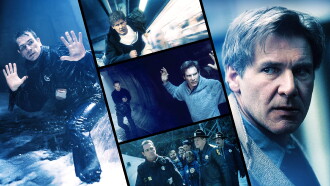
Wrongfully convicted of murdering his wife and sentenced to death, Richard Kimble escapes from the law in an attempt to find the real killer and clear his name.
Based on the real life story of Myrna Diones, a 14 year-old survivor of a brutal massacre of her, her sister and their two cousins in the Cordillera mountain range in northern Luzon by the very people who should've protect them, policemen .
Today‘s eastern Slovakia. The historian Rimko returns here after many years with his young lover to search for answers to the difficult questions of his own life attitudes, mistakes and moral debts in the land of his childhood.
After 300 years of slumber, three sister witches are accidentally resurrected in Salem on Halloween night, and it is up to three kids and their newfound feline friend to put an end to the witches' reign of terror once and for all.