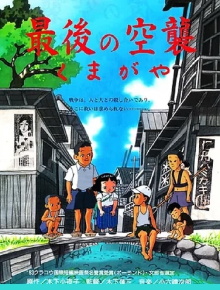
The central character is a 7 year old girl called Sachiko. She has just lost her immediate family in the firebombing of Tokyo and takes the train to her uncle’s family in Kumagaya in Saitama Prefecture. She is not out of danger yet, for the train gets shot at by a plane along the journey. Her uncle meets her at the station and he and his whole family welcome her with open arms. With her cousins, Sachiko explores the beauty of the natural landscape around Kumagaya. Sadly, these beautiful days of late summer are not to last. The final movement of the film depicts the final air raid of the war. The city descends into fear and chaos and Sachiko gets separated from her family with tragic results.
A woman with ‘no name and no country’ in search of a sense of belonging. Asked to write a script about her own experience, she constructs an ‘autobiography’ which is partly fiction.
A gruesome look into the infamous and seemingly neverending 1991 Vizconde murder case in the Philippines where a woman, her teen daughter, and a 6-year-old were all viciously stabbed to death while the husband was away in America on business.
A world of the future where society is addicted to the drug of television. Supervision sessions create a perfect illusion of reality, making it almost impossible to return to reality.
As part of the film's promotion, a mockumentary was aired on HBO. Titled Hearts of Hot Shots! Part Deux—A Filmmaker's Apology, the mockumentary parodied Hearts of Darkness: A Filmmaker's Apocalypse, the 1991 documentary about the making of the film Apocalypse Now (which starred Charlie Sheen's father, Martin Sheen).
Today‘s eastern Slovakia. The historian Rimko returns here after many years with his young lover to search for answers to the difficult questions of his own life attitudes, mistakes and moral debts in the land of his childhood.
Billy and Jack are modern-day Robin Hoods who engage in petty scums to earn money for the upkeep of a daycare center for indigent and underprivileged children.
This documentary explores the life and times of Russell Dean Willey, a neo-Nazi supergrass, in order to explain the presence of Jack Van Tongeren's Australian Nationalists Movement in Australia, and its spread, especially in difficult economic times.
Comments
Have you watched The Last Air Raid Kumagaya yet? What did you think about it?