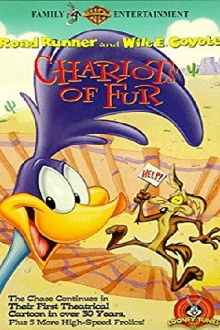
In his ongoing quest to eat a decent meal just once, Coyote is still hunting down the roadrunner, despite a warning from the surgeon general that it can damage your health. Undeterred, Coyote employs bird seed, giant mouse traps (or traps for giant mice?) and springs in an attempt to catch the tricky bird.
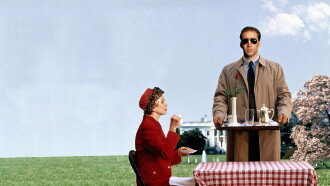
Lloyd and Harry are two men whose stupidity is really indescribable. When Mary, a beautiful woman, loses an important suitcase with money before she leaves for Aspen, the two friends (who have found the suitcase) decide to return it to her.
Vijay becomes the guardian of his sister's three orphaned kids. Later, the children give shelter to Vaijayanthi, a girl trying to escape an arranged marriage, without their uncle's knowledge.
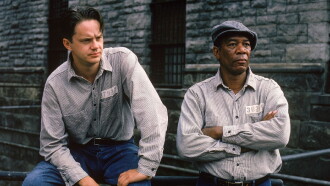
Imprisoned in the 1940s for the double murder of his wife and her lover, upstanding banker Andy Dufresne begins a new life at the Shawshank prison, where he puts his accounting skills to work for an amoral warden.
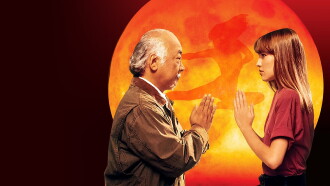
Mr. Miyagi decides to take Julie, a troubled teenager, under his wing after he learns that she blames herself for her parents' demise and struggles to adjust with her grandmother and fellow pupils.
"Men on the edge of a nervous breakdown" - Vincenzo, Gianni, Nicola and Pino are four friends who for years have been seeing every Monday to play poker.
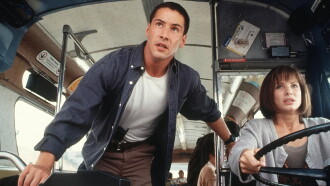
Tensions run high when a crazed bomber rigs a Los Angeles bus with a device that will kill everyone on board if the vehicle's speed dips below fifty miles per hour.