The Obersalzberg was an ordinary Bavarian mountain until Adolf Hitler discovered it in 1923. There at the Berghof, the Nazi leader spent his time surrounded by his most faithful lieutenants and his mistress, Eva Braun.
From May 10, 1940, France is living one of the worst tragedies of it history. In a few weeks, the country folds, and then collapsed in facing the attack of the Nazi Germany.
Stanislaw Ignacy Witkiewicz, better known as Witkacy, enivsages the future horrors of the Polish nation, as embodied by Stalin and Hitler, and the world collapsing into chaos.
After the World War I, Mussolini's perspective on life is severely altered; once a willful socialist reformer, now obsessed with the idea of power, he founds the National Fascist Party in 1921 and assumes political power in 1922, becoming the Duce, dictator of Italy.
Comprised of footage shot during the Nazi regime, including propaganda, newsreels, broadcasts and even some of Eva Braun's colorized personal home movies, we explore the way in which the Third Reich infiltrated the lives of the German population, from 1933 to 1945.
In 1937 the Nazi regime held two exhibitions in Munich: one to stigmatize “Degenerate Art” (which they systematically looted and destroyed) and one, personally curated by Hitler, to glorify “Classic Art”.
Popular movie trailers from 1994
These some of the most viewed trailers for movies released in 1994:
Ouyang Feng is a heartbroken and cynical man who spends his days in the desert, connecting expert swordsmen with those seeking revenge and willing to pay for it.
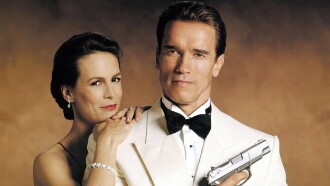
A fearless, globe-trotting, terrorist-battling secret agent has his life turned upside down when he discovers his wife might be having an affair with a used car salesman while terrorists smuggle nuclear war heads into the United States.
Tensions run high when a crazed bomber rigs a Los Angeles bus with a device that will kill everyone on board if the vehicle's speed dips below fifty miles per hour.
Two melancholic Hong Kong policemen fall in love: one with a mysterious underworld figure, the other with a beautiful and ethereal server at a late-night restaurant.
In 1993, Paul Rodgers released the acclaimed blues based album Muddy Water Blues (now available on Eagle Records) with contributions from many special guest artists with a shared love for the blues.