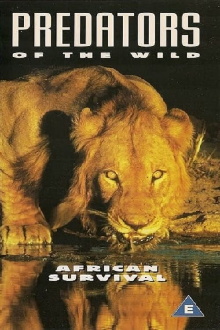
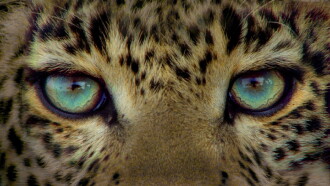
African survival... on the ancient killing grounds of the African savanna, life belongs to the strong, the swift, the cunning. For creatures who are none of the above, death is as close as the nearest shadow, as swift as the beat of a heart. Become an intimate observer of the astonishing drama played out around the African water hole. On the sun-baked outskirts: parched herd animals desperate for the liquid shimmering before them. Between them and the water of life: leopard, lion, hyena and python lie in wait. The climax: a breathtaking display of predatory skill and sheer killing power unmatched anywhere in nature!
Although first glance reveals little more than stones and sand, the desert is alive. Witness moving rocks, spitting mud pots, gorgeous flowers and the never-ending battle for survival between desert creatures of every shape, size and description.
Pemba is a Mamma's Boy. At two-years old, he should be independent, but he's still living at home. Like most teenagers, he's impatient and headstrong, which makes him bad at stalking and hunting, so Mom provides all their meals.
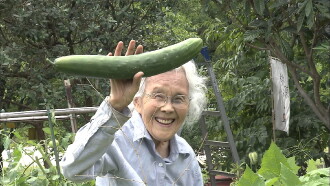
90-year-old architect Shuichi Tsubata and his 87-year-old wife Hideko live in Aichi Prefecture. Their garden is bursting with 70 types of vegetables and 50 types of fruits, and they live in harmony with nature.
Born in London in 1934, Jane Goodall spent decades in Tanzania’s Gombe Stream National Park, studying the social and family structures of chimpanzees and helping to bring their ecological vulnerability into the public consciousness.
A street-wise kid, Mark Sway, sees the suicide of Jerome Clifford, a prominent Louisiana lawyer, whose current client is Barry 'The Blade' Muldano, a Mafia hit-man.
Mr. Miyagi decides to take Julie, a troubled teenager, under his wing after he learns that she blames herself for her parents' demise and struggles to adjust with her grandmother and fellow pupils.
A fearless, globe-trotting, terrorist-battling secret agent has his life turned upside down when he discovers his wife might be having an affair with a used car salesman while terrorists smuggle nuclear war heads into the United States.
A man with a low IQ has accomplished great things in his life and been present during significant historic events—in each case, far exceeding what anyone imagined he could do.
Colonel William F. Guile leads an international Allied Nations strike force to free relief workers held hostage by the megalomaniacal dictator General M.
"Men on the edge of a nervous breakdown" - Vincenzo, Gianni, Nicola and Pino are four friends who for years have been seeing every Monday to play poker.
Vijay becomes the guardian of his sister's three orphaned kids. Later, the children give shelter to Vaijayanthi, a girl trying to escape an arranged marriage, without their uncle's knowledge.
Comments
Have you watched Predators of the Wild: African Survival yet? What did you think about it?