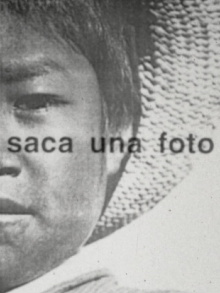
Saca una Foto was completed several months after the Zapatista Revolution in January of 1994. Filmed throughout Chiapas and Yucatan the film juxtaposes the Western influences on the Maya and the filmmaker’s own sense of intrusion. The sounds of Spanish opera interwoven with the shaman chant through the corridors of an ancient Mayan palace, and the reoccurring voice of a young Mayan girl asking to have her picture taken for money - ”Saca una foto” - take my picture, depicts the complexities the filmmaker has towards making the film. The clashing of modern day Mexico with ancient tradition is reflected in the awkwardness of the eye of the camera.
A story about a rural family in China. The husband stays at home and farms the land, while the wife goes into town to be a prostitute to earn more money.
Toward the latter part of his life, George Balanchine talked about creating a "dictionary" of his technique, a visual reference for the students of ballet.
Vijay becomes the guardian of his sister's three orphaned kids. Later, the children give shelter to Vaijayanthi, a girl trying to escape an arranged marriage, without their uncle's knowledge.
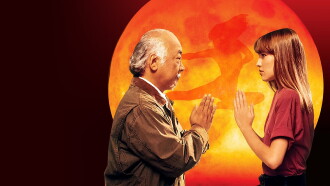
Mr. Miyagi decides to take Julie, a troubled teenager, under his wing after he learns that she blames herself for her parents' demise and struggles to adjust with her grandmother and fellow pupils.
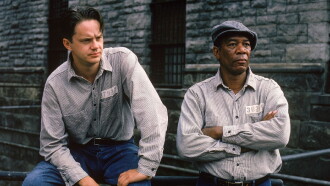
Imprisoned in the 1940s for the double murder of his wife and her lover, upstanding banker Andy Dufresne begins a new life at the Shawshank prison, where he puts his accounting skills to work for an amoral warden.
Pamela Sutch (Rana) stars as an unfortunate cheerleader who stops to eat at Zulu Charlie’s, little realizing that she’s going to be a big part of the meal! Pam is stripped to her underwear and then cooked over a sizzling barbecue.
Peter Sandmann, the charming owner of a marriage institute, is a brilliant matchmaker. His problem: all the candidates would love to share a table and bed with him straight away, but the lively mini-playboy is extremely reluctant to exchange rings.
This film is based on the actual events referred to as the "Mühlviertler Hasenjagd" (Hare-hunt in the Mühlviertel) which occurred in February 1945 around the Mauthausen concentration camp.
Comments
Have you watched Saca una Foto yet? What did you think about it?