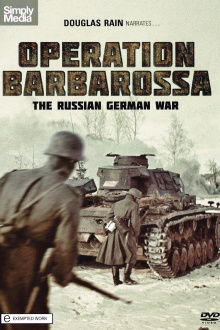
This is a rare look at one of the worst horror stories in the long infamous history of warfare. This series features captured German and Russian film footage, much of which has never been seen before. For decades the Cold War prevented us from looking closely at what really happened between the Russians and the Germans on the Eastern Front during World War II. More than a struggle between nations, it pitted maniacal tyrant against maniacal tyrant, evil ideology against evil ideology. The lives of tens of millions of human beings were consumed by its raging hatreds and appalling indignities. One in every ten Russians died. One in every four Poles died. Whole divisions of Italians, Romanians, Hungarians disappeared with barely a trace. An average of 17,800 people died on every single day and this, the war on the Russian German Front, lasted for 1,400 days. This series features captured German and Russian film footage, much of which has never been seen before.
"The film is a travelogue of sorts. In 1960 my family lived in Brazil when my father discovered his sister and brother in Moscow, who he hadn't seen for 40 years, were still alive.
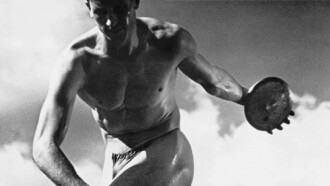
Starting with a long and lyrical overture, evoking the origins of the Olympic Games in ancient Greece, Riefenstahl covers twenty-one athletic events in the first half of this two-part love letter to the human body and spirit, culminating with the marathon, where Jesse Owens became the first track and field athlete to win four gold medals in a single Olympics.
Brest, 1950. The war ended five years ago and nothing remains of the city. Massive bombings and intense fighting lasting more than a month turned the city, its docks, its arsenal, into ashes.
Part two of Leni Riefenstahl's monumental examination of the 1938 Olympic Games, the cameras leave the main stadium and venture into the many halls and fields deployed for such sports as fencing, polo, cycling, and the modern pentathlon, which was won by American Glenn Morris.
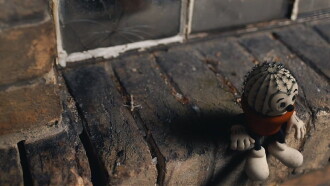
Aleksandar Zograf, a renowned cartoonist discovers an unusual comic book from World War II. The comic’s hero is Kaktus Kid – a small cactus trapped in his pot.
The ruined harbor of Rotterdam obstructs the recovery of The Netherlands after the war. Rapidly and with borrowed strength the harbor takes its rightful place in the city of Rotterdam.
The true story of technical troubles that scuttle the Apollo 13 lunar mission in 1970, risking the lives of astronaut Jim Lovell and his crew, with the failed journey turning into a thrilling saga of heroism.
Patty Duke plays a divorced woman who goes to law school to defend herself in court after a chauvinistic judge awards her rotten husband their property.
Keong comes from Hong Kong to visit New York for his uncle's wedding. His uncle runs a market in the Bronx and Keong offers to help out while Uncle is on his honeymoon.
The wind swirls up dust in a desert landscape. The picture is followed by images of clouds racing over the skyline of a city, of reflections on an expanse of water, of waves breaking over an embankment and of row upon row of burning candles.
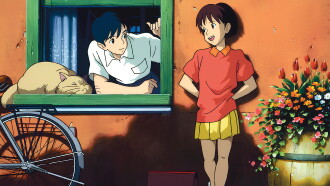
Shizuku lives a simple life, dominated by her love for stories and writing. One day she notices that all the library books she has have been previously checked out by the same person: "Seiji Amasawa.
Fact-based drama, set in 1910 Milwaukee, about an older married woman, bored with her husband, and her dead son's friend she takes as a lover and hides in her attic over the next two decades -- an affair that ends in murder.