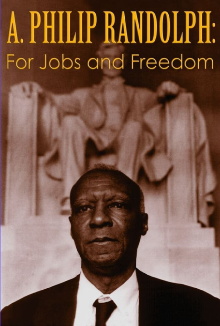
Ask most people who led the 1963 March on Washington and they'll probably tell you Martin Luther King, Jr. But the real force behind the event was the man many call the pre-eminent black labor leader of the century and the father of the modern civil rights movement: A. Philip Randolph. Randolph believed that economic rights was the key to advancing civil rights. A. PHILIP RANDOLPH: FOR JOBS AND FREEDOM takes viewers on a tour of 20th-century civil rights and labor history as it chronicles Randolph's legendary efforts to build a more equitable society.
Set on May 18, 1993—the day on which Denmark voted to join the European Union, just a few months after they'd voted not to do so—the film follows eight or so disparate Danes (an escaped mental patient, a newly-famous singer, a business executive, and their assorted families and cohorts) as they unwittingly alter one another's lives, for better and for worse.
BEAUTIFUL FUNERALS is a hand-painted double-step-printed film composed of 1) dense blackness variously punctuated by brilliantly colored jewel/flower-like shapes AND 2) interruptive white sections which are fuzzily dotted with blurred whites and criss-crossed by black "brushstrokes" and hard-edge straight black and white lines.
The true story of a Prussian aristocrat working for German military intelligence during World War II, who, with a group of fellow devout Christians, plotted to assassinate Hitler with a bomb in his briefcase.
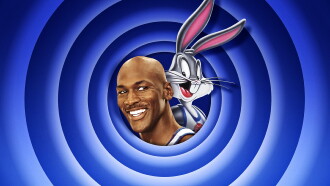
With their freedom on the line, the Looney Tunes seek the help of NBA superstar Michael Jordan to win a basketball game against a team of moronic aliens.
Comments
Have you watched A. Philip Randolph: For Jobs and Freedom yet? What did you think about it?