With the help of a talking freeway billboard, a "wacky weatherman" tries to win the heart of an English newspaper reporter, who is struggling to make sense of the strange world of early-90s Los Angeles.
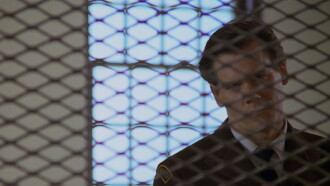
Four hardened crooks break out of prison. Hunted down, with nowhere to run, they seek refuge in the only place the police cannot follow, a Cistercian monastery.
The frustrated housewife Leslie visits an animal shop to purchase a flea-collar. Unknowing that the owner is a werewolf, she accepts his invitation to lunch and later in his apartment.
A horror short film, in he style of a Goosebumps episode, revolving around a girl grounded in a house on Halloween that seems to be plagued by a monster mimicking her boyfriend.
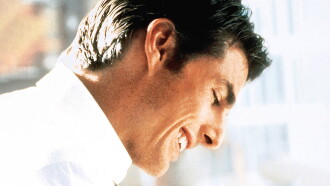
Jerry Maguire used to be a typical sports agent: willing to do just about anything he could to get the biggest possible contracts for his clients, plus a nice commission for himself.
Director Mohsen Makhmalbaf claims to have never seen a movie before making his first film. Doubtful as it sounds, this boast matches perfectly with the controversial artist's personae.
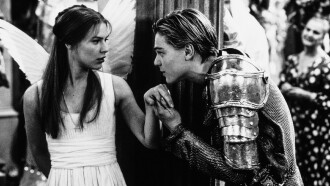
In this contemporary take on William Shakespeare's classic tragedy, the Montagues and Capulets have moved their ongoing feud to the sweltering suburb of Verona Beach, where Romeo and Juliet fall in love and secretly wed.
The dynamic PR-agent Hannah is starting up her dream-job in the Hochstedt Company producing toys and soon falls in love with her firm's junior executive director, Wolfgang.
Filmmaker Ernesto Rimoch looks at the potent combination of love and ambition in this film about a couple who's so happy their daughter is marrying into a rich clan that they throw the best wedding ever, even if they can't afford it.
When rogue stealth-fighter pilot Vic Deakins deliberately drops off the radar while on maneuvers, the Air Force ends up with two stolen nuclear warheads -- and Deakins's co-pilot, Riley Hale, is the military's only hope for getting them back.