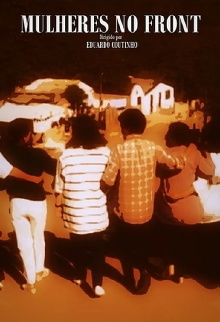
Three stories of female action in social movements, close in their struggle but distant in the geographical space: the Jardim Uchôa Residents Association, in Recife; the Rancho Fundo Residents Association, in Rio de Janeiro; and the Popular Legal Prosecutors group in Bom Jesus, Porto Alegre.
Set on May 18, 1993—the day on which Denmark voted to join the European Union, just a few months after they'd voted not to do so—the film follows eight or so disparate Danes (an escaped mental patient, a newly-famous singer, a business executive, and their assorted families and cohorts) as they unwittingly alter one another's lives, for better and for worse.
Australian-born filmmaker George Miller offers a personal view of Australian films. He suggests that they can be regarded as visual music, public dreaming, mythology, and song-lines.
Charn is working on his thesis to convert the Concert Hall project to Music Complex, and his advisor suggests him to see Gerrard for any information regarding the project.
Military doctor Kwiatkowski, serving in a barracks hospital on the Western Territories, is rewarded with a week’s leave after successfully operating on Colonel Kiziora of the UB.
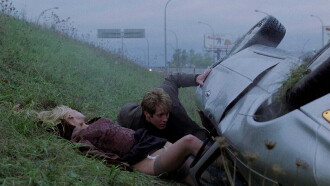
Teenager, Clare Steves, is kidnapped by an old boyfriend, Eddie Spencer, who demands $250,000. The ransom is paid and Clare is released, but when the kidnapers are caught, they claim that the whole scheme was Clare's idea as a way to punish her father.
An old tango singer tries to contact his teenage son. A woman who is death or the Devil appears to him and asks him to sell his soul to connect with his son again.