VIDEO
International Titles
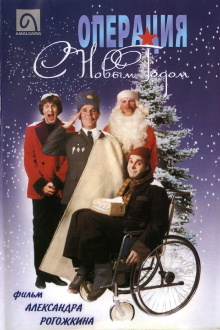
Operatsiya 'S Novym Godom'! Trailer
Operation Happy New Year Trailer
International Releases Dates
Russia
01 January 1996
United States
11 November 1996
Alternative movies trailers for Operation 'Happy New Year'!
More movie trailers, teasers, and clips from Operation 'Happy New Year'!:
Battlefield 3 Operation Happy New Year или С Новым Годом. Новичок
Видео на конкурс ASUS и NVIDIA от Музыка: Evanescence- Lost in Paradise - трек из начала. ABBA- Happy new Year - из конца. Участники:
Popular movie trailers from 1996
These some of the most viewed trailers for movies released in 1996:
24 July 1996
A young lawyer defends a black man accused of murdering two white men who raped his 10-year-old daughter, sparking a rebirth of the KKK.
14 February 1996
Carla's (Rita Magdalena) sister commits suicide. Devastated, she decides to go to the province.. where she wreaks havoc among the men.
10 June 1996
When recently single Steven moves into his new apartment, cable guy Chip comes to hook him up—and doesn't let go.
19 January 1996
After kidnapping a father and his two kids, the Gecko brothers head south to a seedy Mexican bar to hide out in safety, unaware of its notorious clientele.
21 June 1996
Isolated in the bell tower of Notre Dame, Quasimodo longs to experience the world beyond the cathedral walls, despite the wishes of his stern guardian, the Judge of Paris Claude Frollo.
02 July 1996
Strange phenomena surface around the globe. The skies ignite. Terror races through the world's major cities.
23 February 1996
Heroin addict Mark Renton stumbles through bad ideas and sobriety attempts with his unreliable friends --Sick Boy, Begbie, Spud and Tommy.
01 December 1996
Story of a man whose pride in being the head of his family won't let him accept help from his sick daughters doctor.
12 January 1996
When Ashtray moves to South Central L.A. to live with his father (who appears to be the same age he is) and grandmother (who likes to talk tough and smoke reefer), he falls in with his gang-banging cousin Loc Dog, who along with the requisite pistols and Uzi carries a thermo-nuclear warhead for self-defense.
03 April 1996
Defense attorney Martin Vail takes on jobs for money and prestige rather than any sense of the greater good.
21 November 1996
Howard Langston, a salesman for a mattress company, is constantly kept busy at his job, disappointing his son.
01 January 1996
Peter is fed up with his father’s unfulfilled promises to visit his friend Zoran, who moved far away with his parents some months ago.
Comments
Have you watched Operation 'Happy New Year'! yet? What did you think about it?
Artwork, screen shots, trailers and other imagery is © 1996 CTB Film Company, Nikola Film.