Ottar Gladtvet (1890-1962) was included in the film's first blooming at the turn of the century. He decided early on to become a movie man, and he was a projectionist and theater director before he was twenty. The family bought their first cinema in 1906 and ran for a while two cinemas in Oslo. Later Gladtvet also became a cinematographer and film director, and he was the country's largest producer of commercials before World War II. This film tells about Gladtvets life as a film man, and his film making between 1910 and 1940.
Comprised of a series of bizarre and unrelated episodes, this absurd Italian comedy earned the inglorious honor of being the film with the most audience walkouts at the 1996 Venice Film Festival.
A young man makes ends meet by selling camotes in his small providence town, has zero luck getting with the ladies, and is too broke to afford the hookers of the town.
BEAUTIFUL FUNERALS is a hand-painted double-step-printed film composed of 1) dense blackness variously punctuated by brilliantly colored jewel/flower-like shapes AND 2) interruptive white sections which are fuzzily dotted with blurred whites and criss-crossed by black "brushstrokes" and hard-edge straight black and white lines.
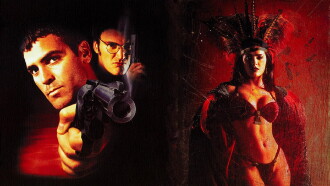
After kidnapping a father and his two kids, the Gecko brothers head south to a seedy Mexican bar to hide out in safety, unaware of its notorious clientele.
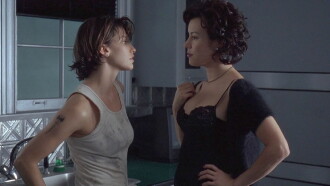
Corky, a tough female ex-convict working on an apartment renovation in a Chicago building, meets a couple living next door, Caesar, a paranoid mobster, and Violet, his seductive girlfriend, who is immediately attracted to her.
When Ethan Hunt, the leader of a crack espionage team whose perilous operation has gone awry with no explanation, discovers that a mole has penetrated the CIA, he's surprised to learn that he's the prime suspect.
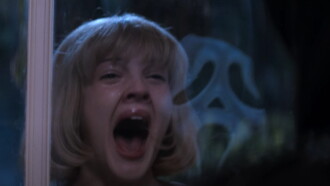
A year after the murder of her mother, a teenage girl is terrorized by a masked killer who targets her and her friends by using scary movies as part of a deadly game.