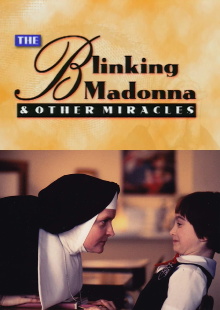
After recording an Italian-American religious festival in Boston’s North End with her video camera, filmmaker Beth Harrington’s neighbors tell her that they see a miracle on the videotape — a statue of the Virgin Mary blinking its eyes. To Harrington’s amazement, and in spite of her lapsed religious beliefs, she must admit that her life has been transformed by the event. And when the press gets a hold of the story what ensues is a funny and touching look at what it means to believe and to belong.
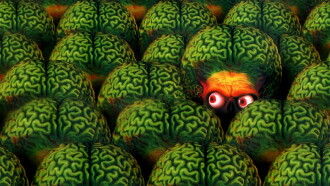
A fleet of Martian spacecraft surrounds the world's major cities and all of humanity waits to see if the extraterrestrial visitors have, as they claim, "come in peace.
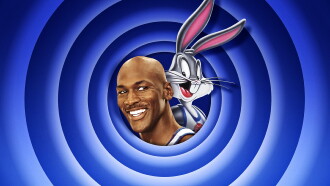
With their freedom on the line, the Looney Tunes seek the help of NBA superstar Michael Jordan to win a basketball game against a team of moronic aliens.
Failed hockey player-turned-golf whiz Happy Gilmore — whose unconventional approach and antics on the green courts the ire of rival Shooter McGavin — is determined to win a PGA tournament so he can save his granny's house with the prize money.
A Catholic school newcomer falls in with a clique of teen witches who wield their powers against all who dare to cross them -- be they teachers, rivals or meddlesome parents.
When rogue stealth-fighter pilot Vic Deakins deliberately drops off the radar while on maneuvers, the Air Force ends up with two stolen nuclear warheads -- and Deakins's co-pilot, Riley Hale, is the military's only hope for getting them back.